I traveled to Cologne, Germany to find out how your favorite fancy luggage gets made.
|
A masterclass in packing light.
|
At Esquire, we are unashamed nerds for luxury. The aesthetic angle certainly counts, but we’re even more intrigued by what makes some things genuinely better than others—the materials, the handwork, and the ability to last.
The story, for us, always begins with the raw materials and the people who transform them, with skill, into something that’s both functional and beautiful. It’s as true, in the right hands, of a pair of benchmade shoes as it is of a factory-made car: if you want to learn the story of luxury, you have to go to the source.
Case in point (sorry): luggage. Buying a proper suitcase is arguably a first serious step in adulthood. Eventually, you learn to avoid those basic Kickstarter-funded brands (look cool, cost little, disintegrate in weeks) in favor of what becomes your Sancho Panza, an indestructible, indispensable sidekick, capable of delivering your stuff in good order to multiple destinations, ideally, for years.
As you plow through life, you begin to realize that when you’re making a long-term investment, it pays to seek out the specialists. They might cost a bit (make that a lot) more than the expedient alternative, but they will pay you back big time. For me, the choice has always been between veteran Cologne-based brand Rimowa, Hamburg-based Montblanc, and Stuttgart’s Porsche Design. It can be no accident that three of luxury luggage’s leading brands are German, each shaped by a culture that has treated functional engineering as a form of luxury for more than a century. Silent wheels and sturdy construction never happen by accident.
|
A few weeks back, I was lucky enough to tour the Rimowa factory near Cologne, to see how the brand’s signature aluminum cases are put together. First things first. It’s not pronounced “Ri-Mo-Wa”; it’s “Ri-Mo-Va.” I was only corrected (politely) three times before it sank in.
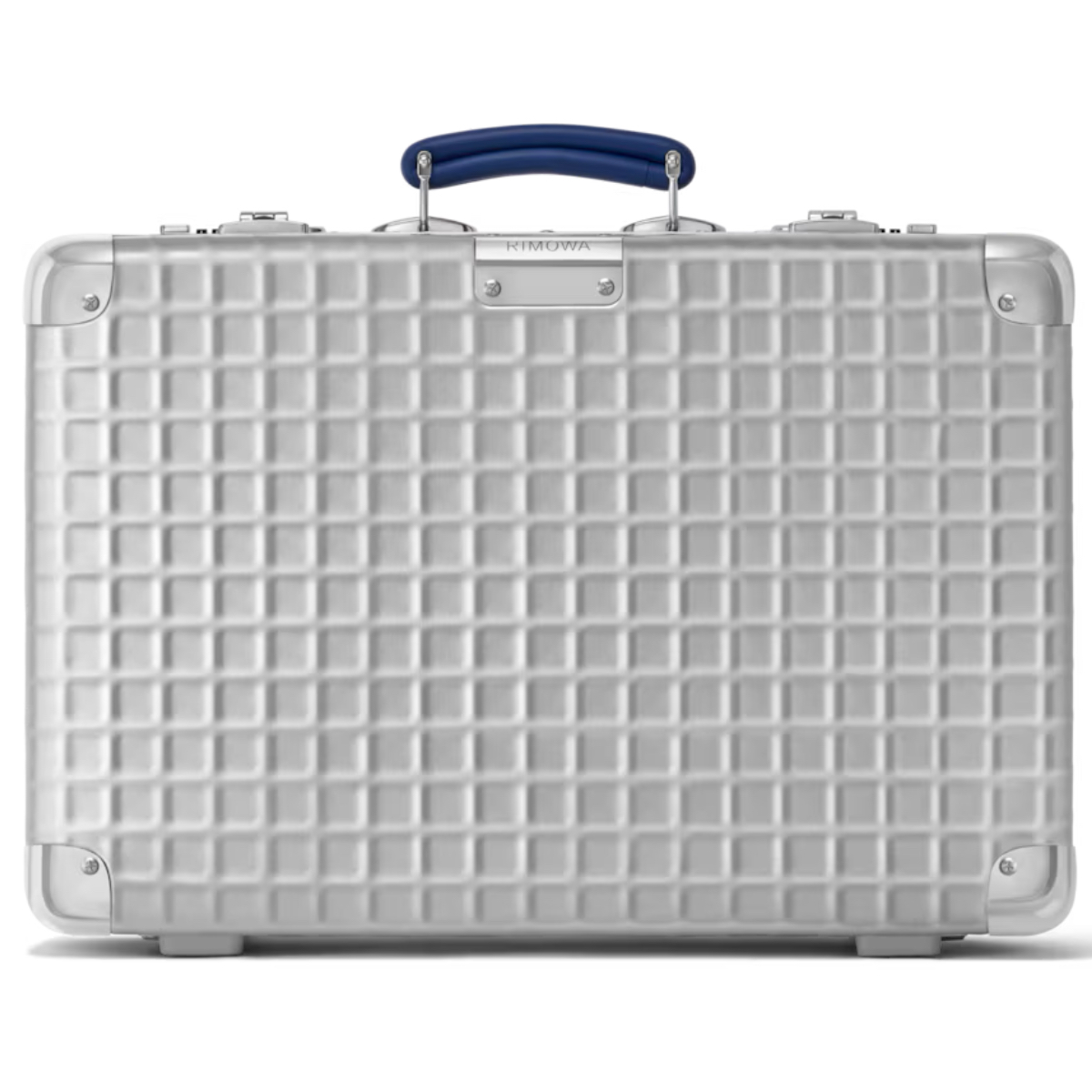
Now, trivia fact number one: the name “Rimowa” is a compression of “Richard Morszeck Warenzeichen”—the son of Rimowa’s original founder with “Warenzeichen” (meaning trademark) tacked on the end. Morszeck transformed the otherwise traditional luggage company when, in 1937, he adopted the nearly new wonder material—aluminum—from the aviation industry. Aluminum was light—great for planes and great for travel—but it was not particularly rigid. A hammered, pebbly pattern in these early Rimowa cases gave the aluminum some protection against scratches, but it was not much cop in the way of dimensional strength.
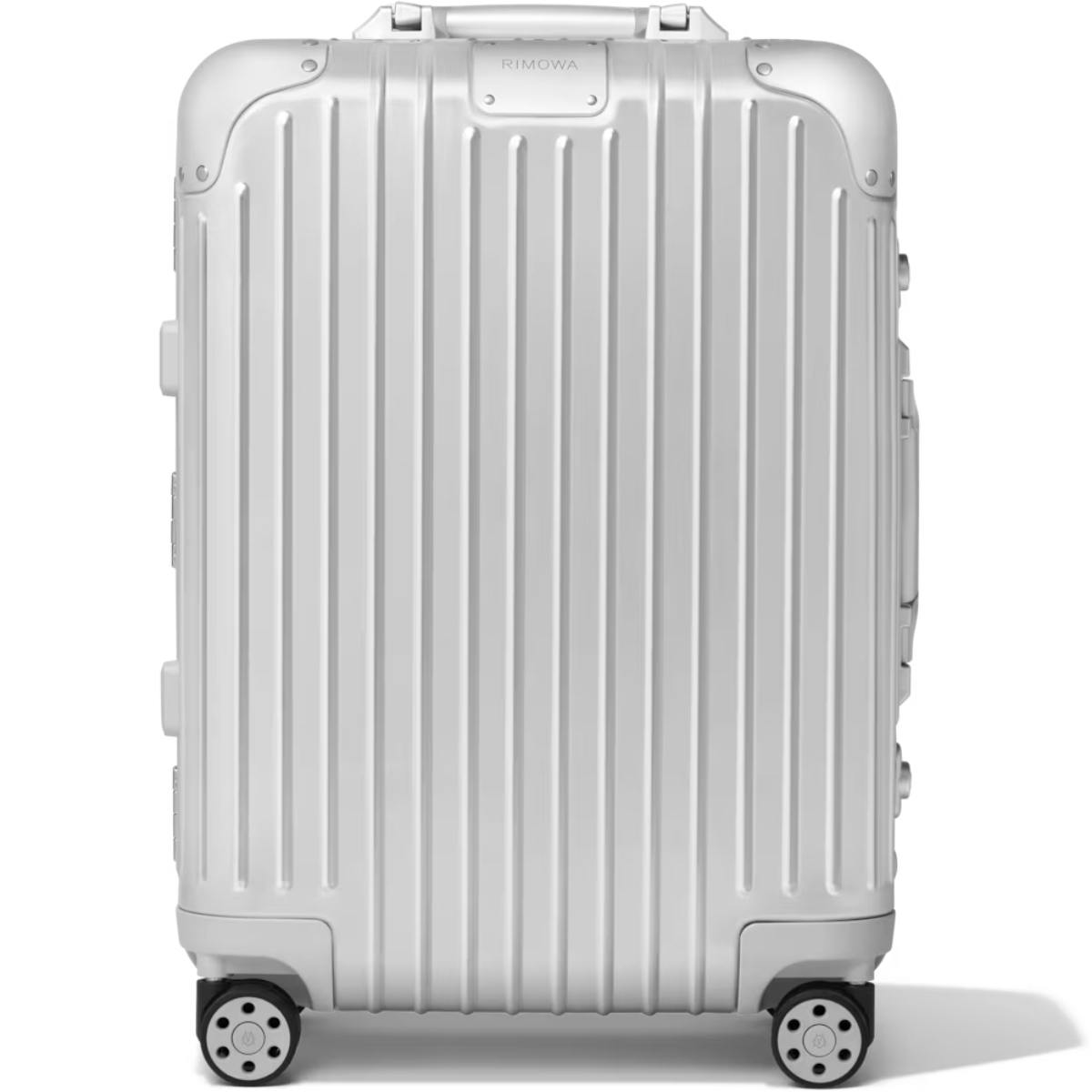
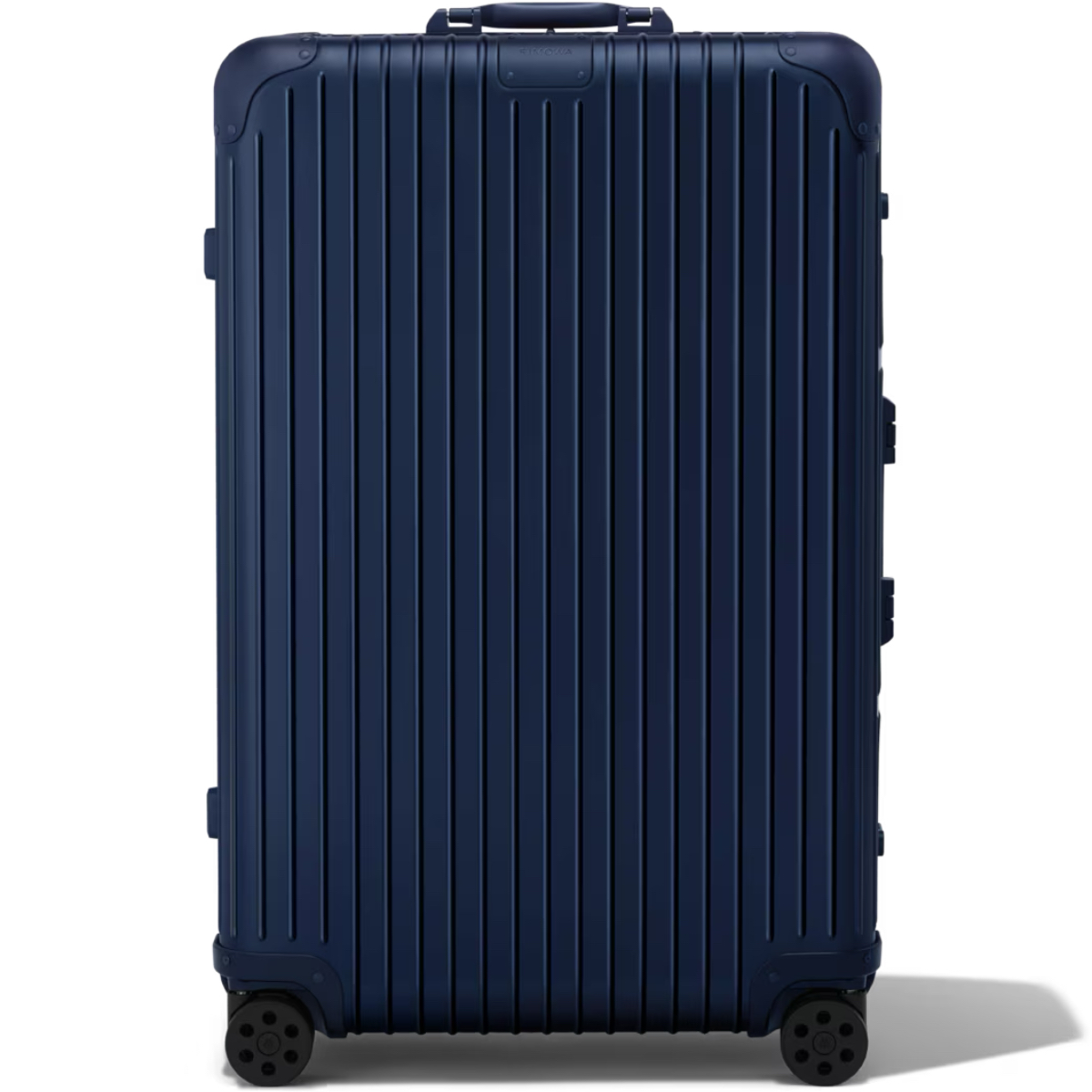
So, in 1950, inspired by the rapid postwar expansion in long-range civil aviation, the brand began to stamp parallel ridges into its aluminum sheeting to give it torsional rigidity and a greater resistance to dents.
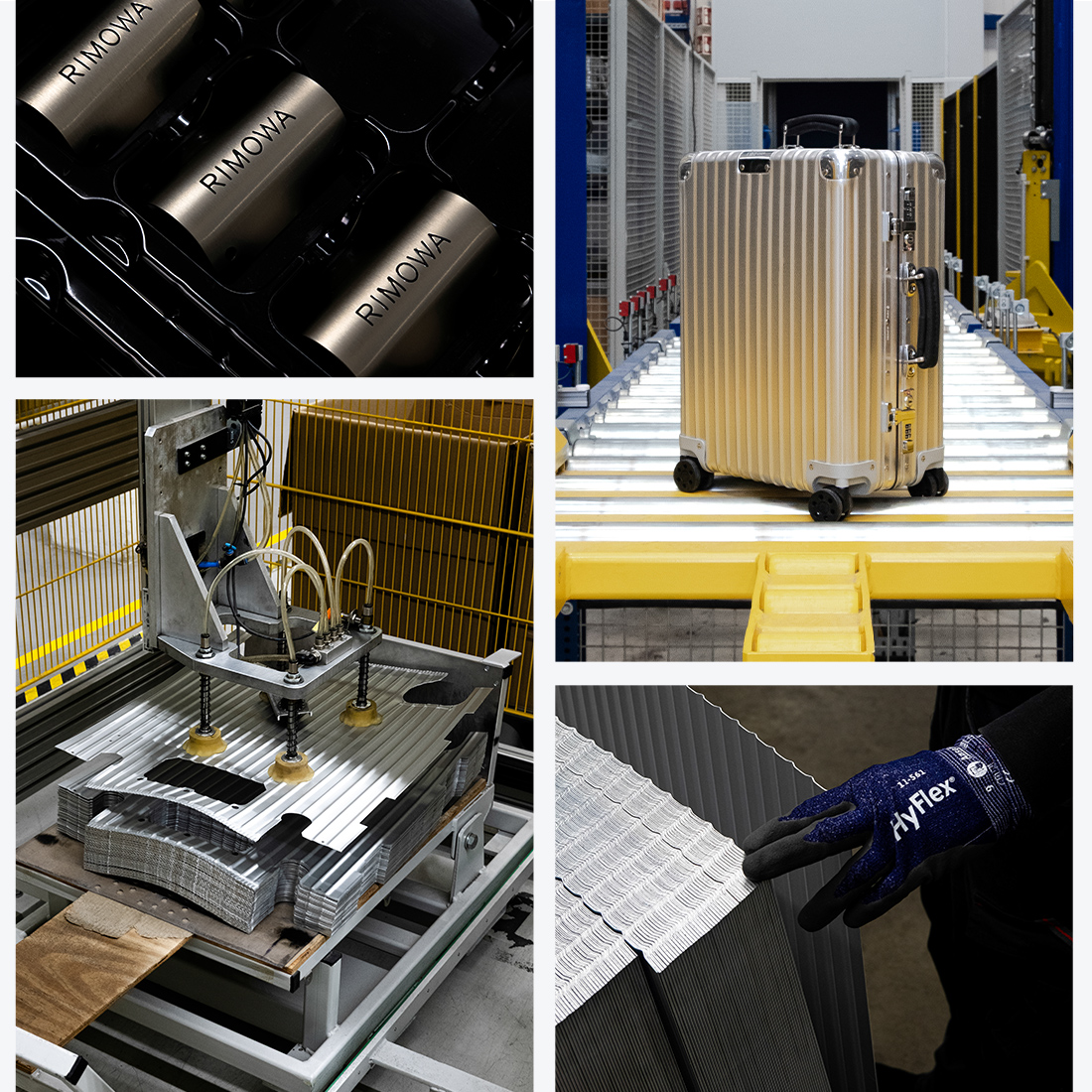
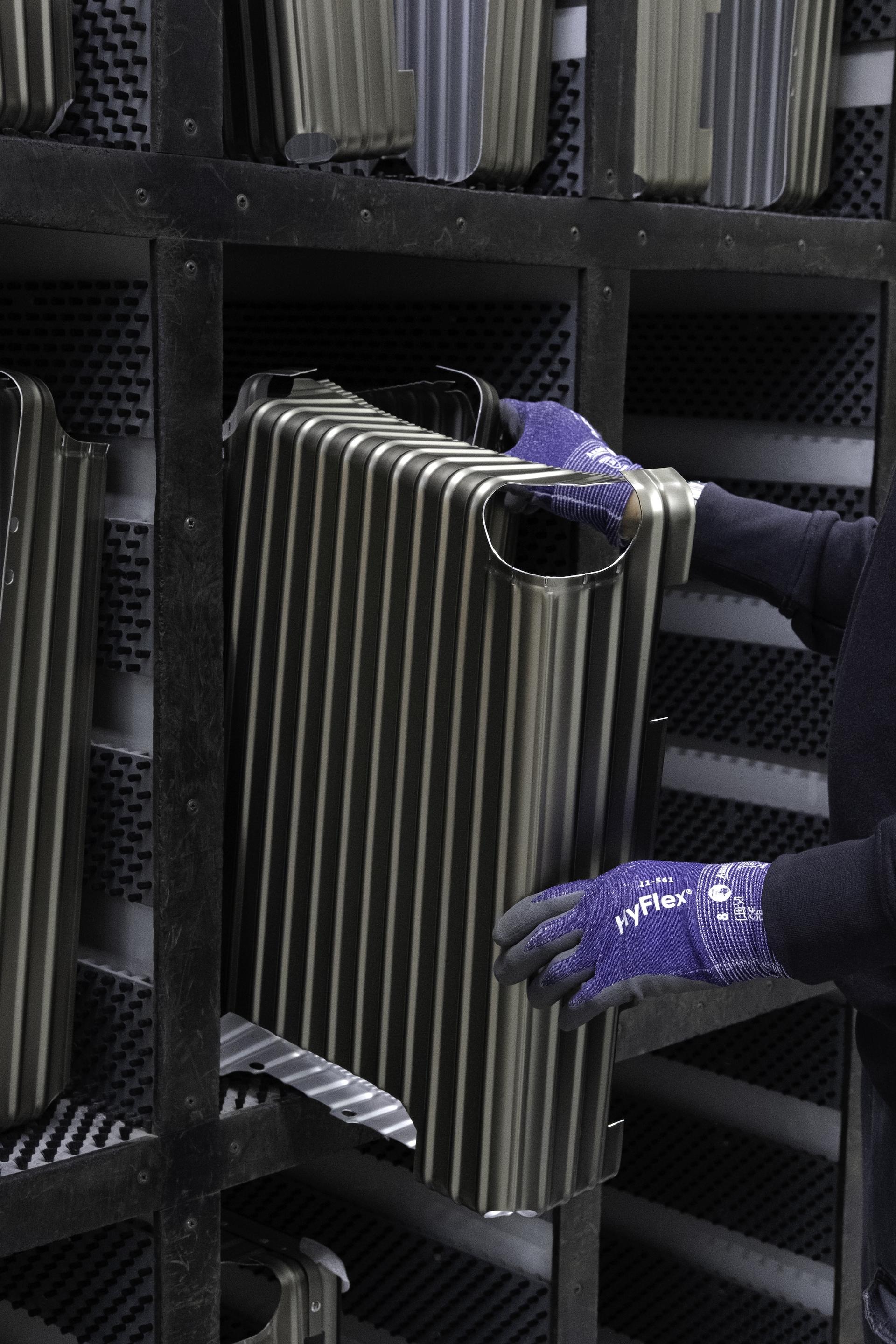
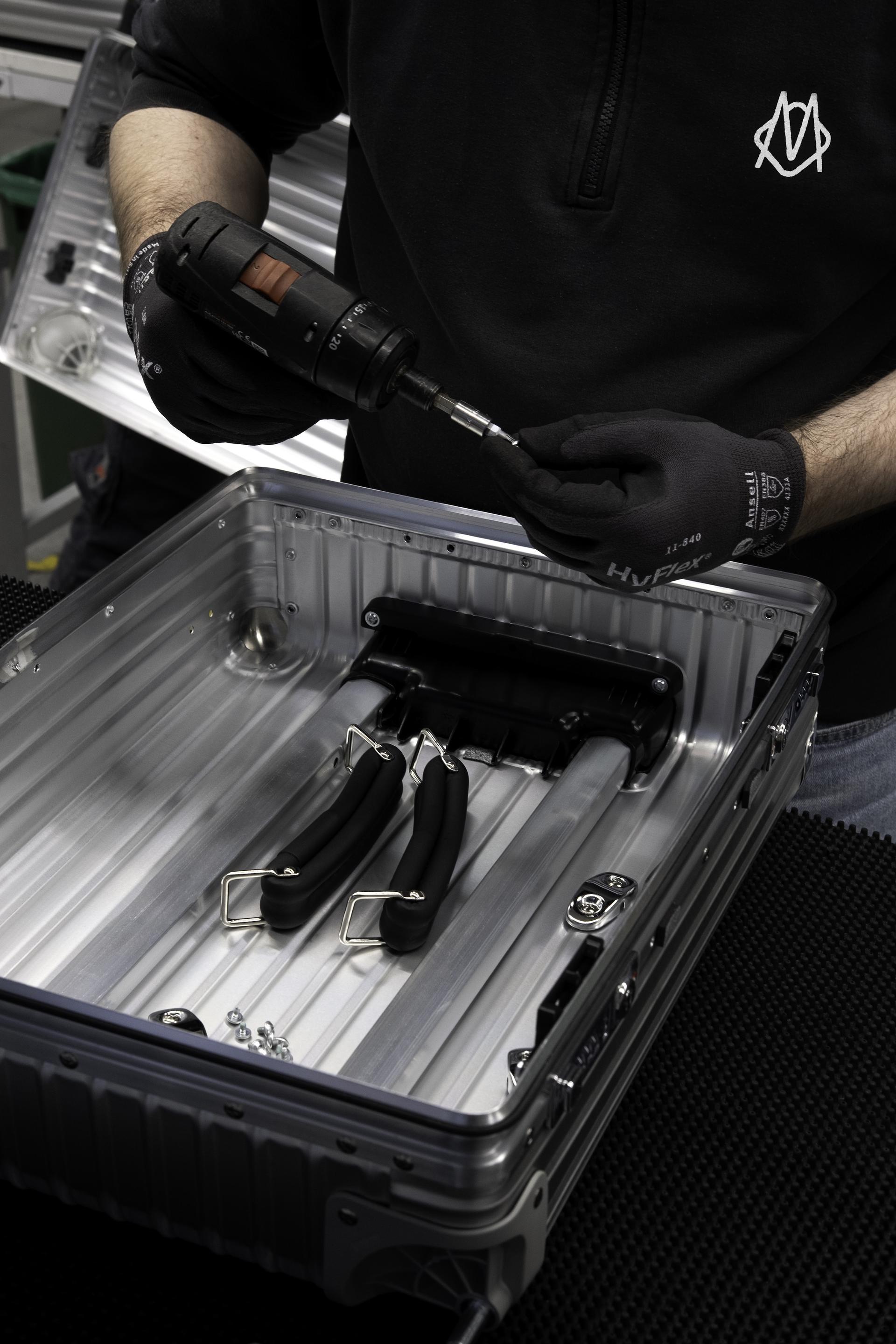
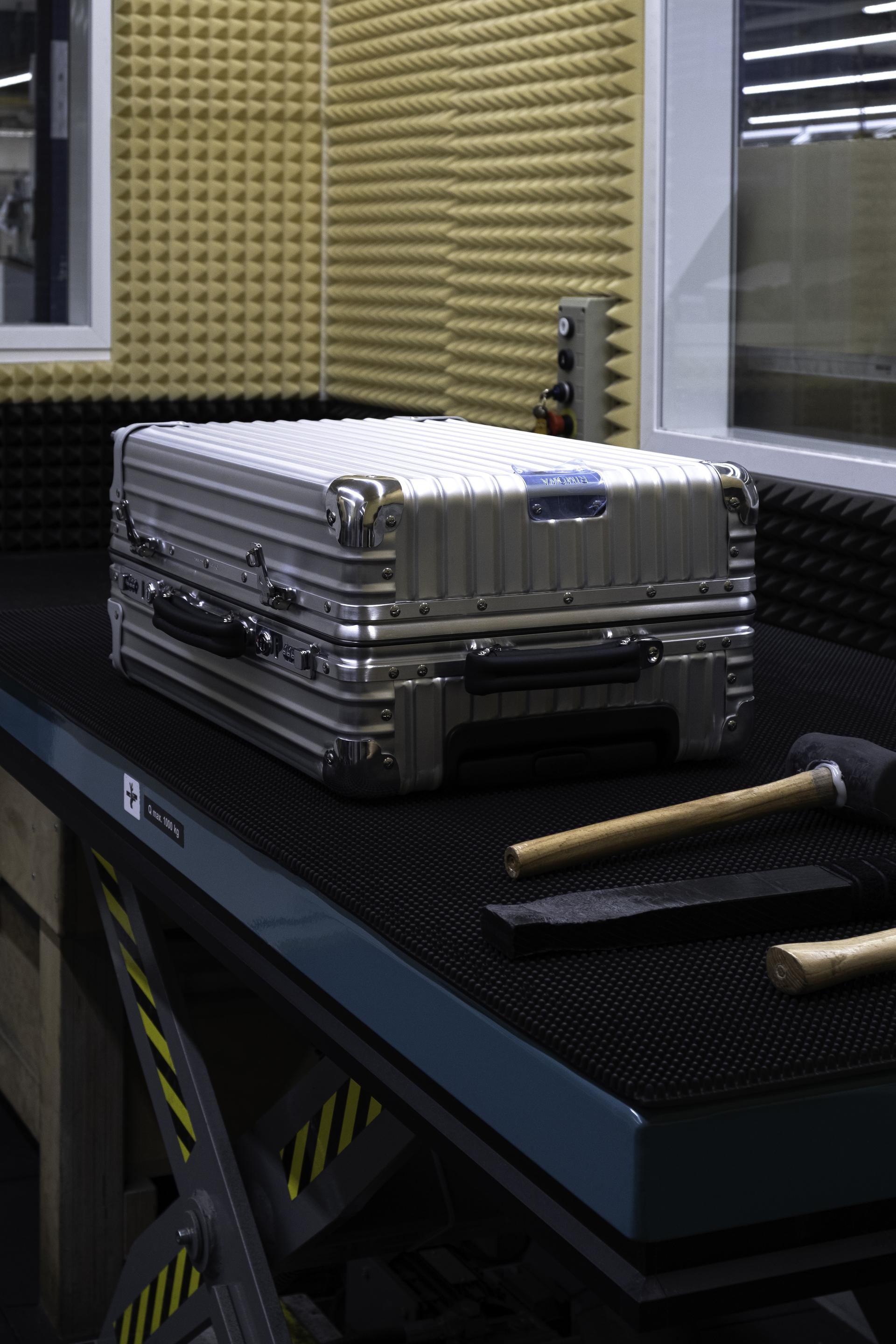
Today, at its manufacturing HQ, spread out across a number of buildings whose exteriors mimic the shapes of the cases it produces, Rimowa still makes its signature aluminum luggage essentially the same way as it did back in 1950, albeit with modern machinery. The distinctive corrugated finish is created by stamping flat sheets with industrial die-stamping machines before another bends them into the beginnings of a case shape. These are then riveted—much like an airplane—with added corner pieces in the major stress points. But it’s not all about machinery, even here. Before the two halves are joined together with hinges comes the critical moment, something that—as yet—it has not been possible to automate. To fit the two halves of a suitcase together perfectly, skilled hands and a deftly wielded mallet are used to gently “tune” the cases. In suitcase manufacturing, it’s the engineering that makes Rimowa aluminum cases workhorses, and the handwork that elevates them to objects of desire.
|
Another less glamorous pillar of luxury, something we often forget in our rush to consume, is longevity. One thing that’s worth noting here is that since 2022, all Rimowa suitcases bought after that date come with a robust lifetime guarantee, which means the stores will repair any functional damage to its cases free of charge (and even retune a case that’s got a bit out of whack), with many of these services done in-store. All of which means your initial outlay nets you a suitcase that’s for life.
The Cologne factory visit coincided with the launch of a brand-new Rimowa initiative to up the luxury quotient still further, with a new customer-service, offering widely customizable case designs. Currently available at the Cologne flagship store only, “Crafted for You” offers customers the possibility of defining even the proportions of a Rimowa case and its interior according to their own needs. Sir Lewis Hamilton popped in during the festivities to pick up a record case made to his own specs.
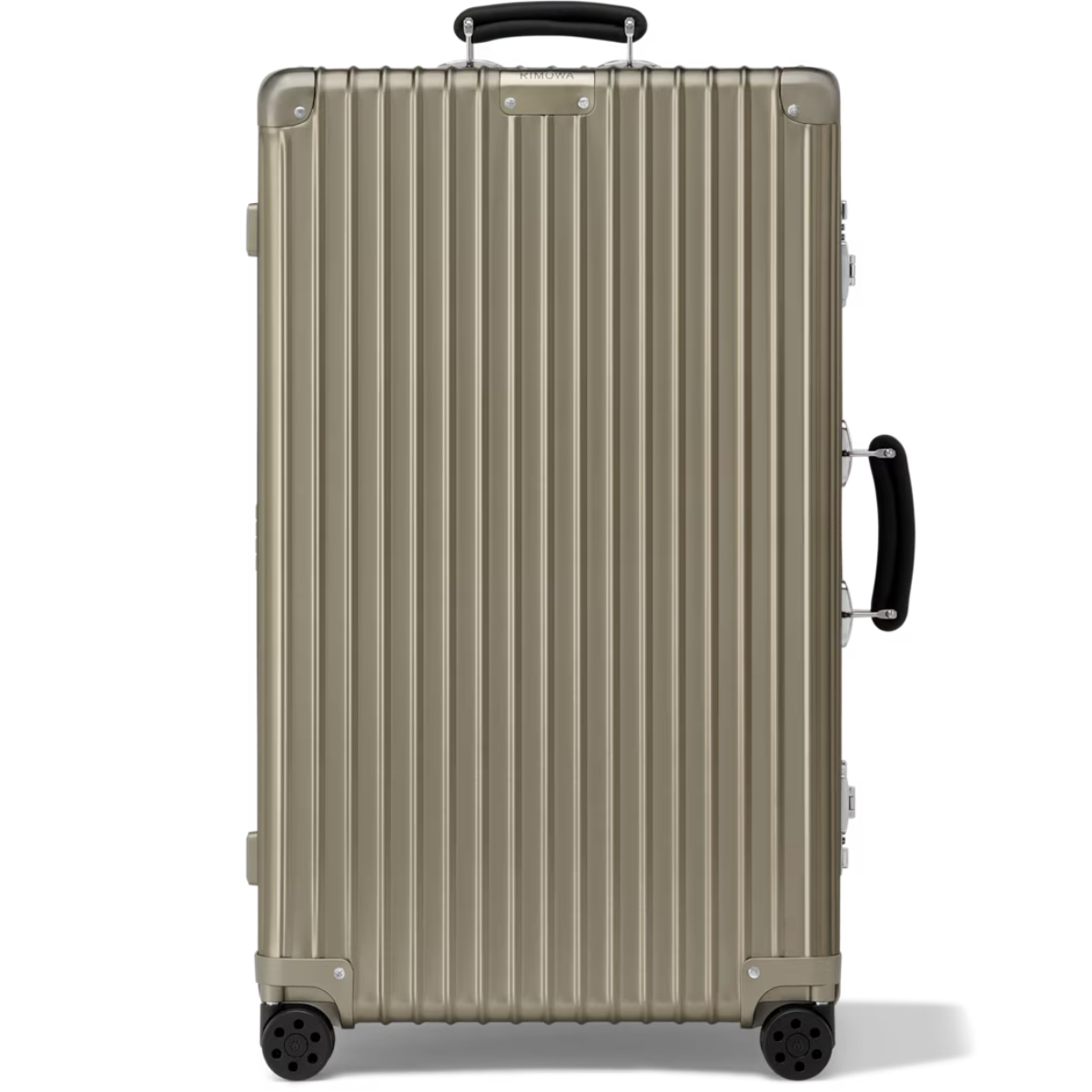
Customers outside Cologne can use the online configurator on rimowa.com to customize a number of details on cases within the Classic range of aluminum wheelies, from metal finishes to handles, wheels, and trims, with enough permutations to guarantee your case looks unlike any other on the carousel.
|
Anyone who owns a premium aluminum case knows that there’s very little give when you come to close one. That’s because the fit of the two halves is dependent on tolerances to fractions of a millimeter. This requires a certain amount of rigor in the packing department. Which is no bad thing perhaps. Once locked shut, however, it offers great protection for your stuff whether you’re checking it or not. Polycarb—the most common modern material for hard cases—has its own advantages here. It tends, on the whole, to be lighter and more affordable, and it has enough flex in it for those of us who are not millimeter-perfect with our packing. Polycarbonate also resists dings and dents better on the whole. Sometimes, though, I wonder if it lacks the glam factor of aluminum. At any luggage carousel, among a sea of anodyne black, you’ll easily pick out a much-traveled aluminum case, beat up and often plastered with stickers from the four corners of the globe, wearing its scars with pride.
|
|
|
|
Thanks for reading this week’s Big Black Book newsletter. See you in a couple weeks. Until then, feel free to drop me a note at nicksullivanesquire@hearst.com.
- Nick Sullivan, creative director
|
|
|
|
Did someone forward you this email? Sign up here.
|
|
|
|
|






No comments:
Post a Comment