Wednesday, February 18, 2026 |
|
|
I have a theory that everyone has a Tom Junod story that is just for them. A story that hits them somewhere deep inside, cracks something open. For me, it's the Mister Rogers profile. That line near the end: "I had never prayed like that before, ever. I had always been a great prayer, a powerful one, but only fitfully, only out of guilt, only when fear and desperation drove me to it." Junod is a master of magazine writing and one of the best who's ever written for Esquire. But until now, he'd never written a book. His debut, In the Days of My Youth I Was Told What It Means to Be a Man, comes out next month. We assigned John Hendrickson to profile Junod, to try to understand why it took him nearly a lifetime to write his memoir. He left with something more. You can read the story below. – Kevin Dupzyk, contributing editor |
|
|
The legendary magazine writer helped teach readers what masculinity looks like in the 21st century. To write his first book, he had to confront the man who first taught him: his father.
|
Twenty years ago, Tom Junod was in the same position I'm in now. He was writing a profile of Norman Mailer, whose work had defined so much of vintage Esquire. "He is asking only what he has always asked—that we judge him by the extent of his own outsized ambition and his own outsized accomplishment," Tom wrote. "Which means that we judge him as fortune judges men who play for the highest stakes: pitilessly." Tom possesses the same outsized ambition. He is not a celebrity, but to some, he is famous, even revered. A list of Esquire's ten most important writers in the magazine's nearly 100-year history would probably look like this: Mailer, Ernest Hemingway, F. Scott Fitzgerald, Joan Didion, Tom Wolfe, Gay Talese, James Baldwin, Nora Ephron, Richard Ben Cramer, and, well, Tom Junod. But the others on that list also wrote acclaimed novels, or Oscar-nominated screenplays, or canonical nonfiction books. Despite his pedigree, Tom could never do the Big Thing. Tom Junod, the titan, couldn't write a book. But now, at 67, with a creased forehead and a tousle of white hair, three decades after signing that contract, Tom is preparing to publish the thing he was meant to write all along. March 10 will mark the publication of In the Days of My Youth I Was Told What It Means to Be a Man. Tom's 400-page memoir is an investigation into his confounding and philandering father and the people whose lives he affected. Tom spent ten years reporting and writing it, but in a way, he'd been working on it his whole life. |
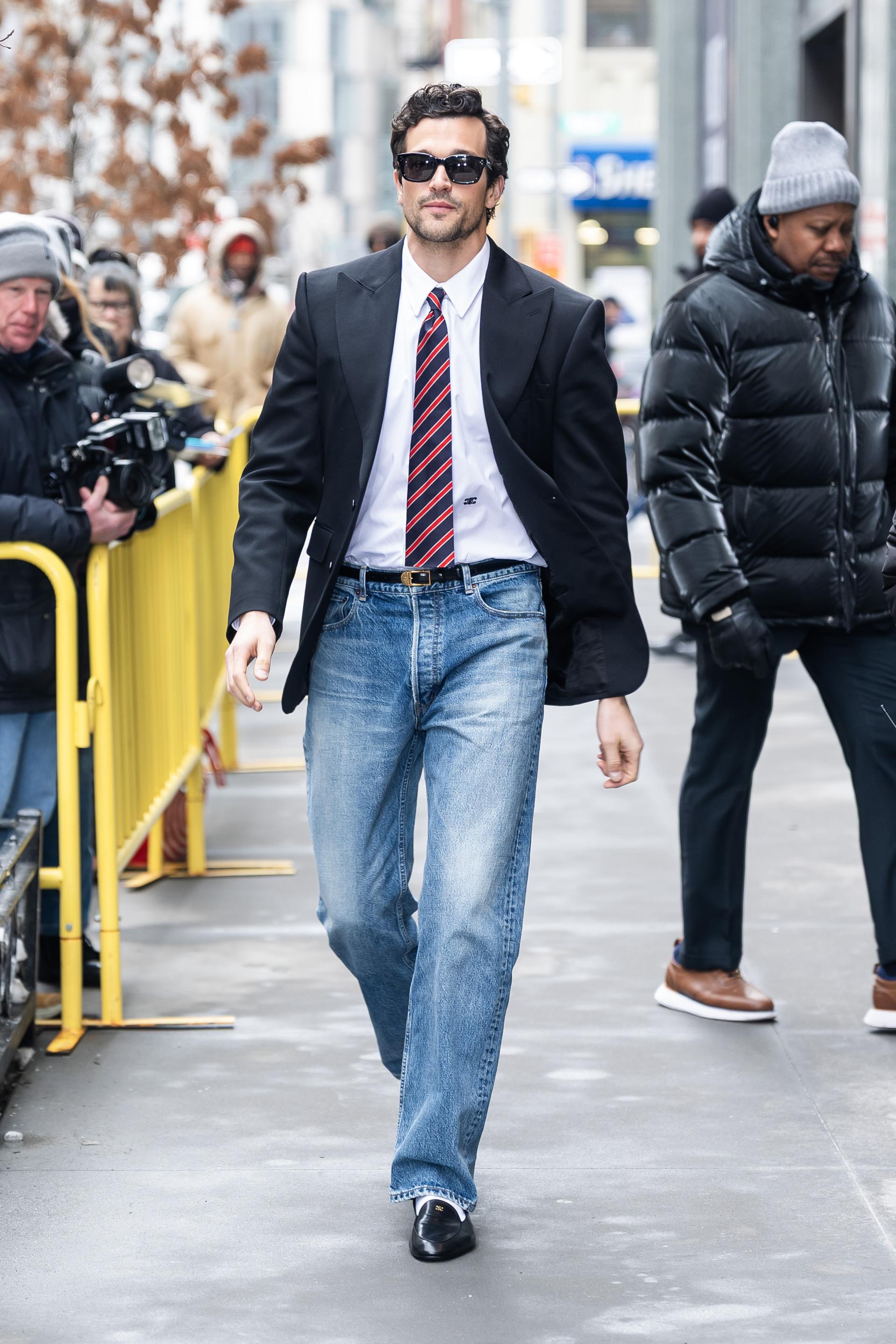
| | Nothing ruins the magic of an intimate moment like unbuttoning your jeans for your partner as they kneel before you only to reveal a random guy's brand name above your crotch. Your date is now at eye level with the words "Joe Boxer," and they're wondering, Why does Joe Boxer get to be grabbing his balls every day? You've chosen to be branded above your crotch like you're a farm animal belonging to the various fruits of the loom. This applies to all parties and partners: It's more attractive to have underwear without some guy's name plastered across the waistband like a billboard. Oftentimes in the pages of Esquire, we celebrate men who wear their clothes and don't let their clothes wear them. Let's start with how that outfit comes together and where any outfit begins—the underwear drawer. |
|
|
Hair transplants look good now. We're well past the era of vertically implanted clusters (plugs, as you know 'em), visible strip scars, and hairlines that looked artificial the moment someone moved their head. Hair transplantation is transformative, and it's unmissable when someone gets a great one. Hell, you definitely know a handful of guys who have had one or even two transplants, whether or not they've been public about sharing. Unfortunately, not all results look A+. Though I often hear from readers who are thrilled with their hair transplants, others ask why theirs fell short. There's groundwork to do before any procedure like this. You need to educate yourself about the process, manage your expectations, and find a good provider in your price range (near, far, or even abroad). |
|
|
 Tuesday, February 17, 2026 |
|
|
In late 2024, I read What It Takes by Richard Ben Cramer. Over 1,000-plus pages, Cramer meticulously chronicled the 1988 presidential election through the lens of six candidates, including George H.W. Bush, Michael Dukakis, and Joe Biden. It's considered by many to be one of the best political books ever written, but Cramer did receive criticism for one person he left out: Jesse Jackson. Jackson became a huge, surprising part of that election cycle's story, and in the decades since, he became one of the most influential people in American politics. In 2016, Nieman Storyboard caught up with the researcher for What It Takes, Mark Zwonitzer—who briefly worked at Esquire—about why. "Richard… felt that Jackson didn't get over that hurdle of getting to the point where he was really thinking he was going to be president," Zwonitzer said. "Now, was that a bit of a cop-out? Possibly." If you asked Esquire political columnist Charles P. Pierce, he'd say "Definitely." Pierce penned a tribute to the politician and civil rights leader, who died on Tuesday, writing, "Sail on, Reverend. You were ... somebody." Read the column at the link below. – Chris Hatler, deputy editor |
|
|
The politician and civil rights leader, who died on Tuesday at the age of 84, showed us how an outside candidate could challenge and change the political establishment. |
One day in Marshalltown, Iowa, as the eventual and poisonous 2016 Democratic presidential primary was just getting underway, I found myself hanging around Main Street on a dead-level Sunday afternoon. Suddenly, like the sun breaking through the thickening February clouds, I saw the long march of progressive politics within the Democratic Party, from when it was stuffed in a steamer trunk by Bill Clinton to its (partial) liberation under Barack Obama. (Little did I know that the whole fight would come back with a vengeance over the next several months.) The throughline, I saw, was the two presidential campaigns run by Jesse Jackson in 1984 and 1988. |
|
| We're obsessive about travel over here. In our minds, if we're going to be a magazine that christens the Best Hotels of the Year, we're also going to tell you how we get there and do it in style. We're going to Italy to talk to Gucci and France to talk to Louis Vuitton, and you can bet we've tried just about every damn suitcase doing so. We'll tell you our carry-on essentials and make the case for that Rimowa suitcase. So finally, today, we're here to tell all of our favorite luggage brands that have withstood the test of time. If you want to know every luggage brand on the market, this ain't the place. If you want a small list of the best hard suitcases and soft-sided duffel bags, we can do that. We've whittled our selections down to nine brands, from long-standing houses to a few upstarts. If you're an aspiring frequent flyer or already someone who's keeping track of airline miles, these are the best luggage brands you can buy right now. |
| |
It's hard to believe the Oscar-winning actor has left us, even though he reached the wizened old age of 95. Robert Duvall seemed more permanent, somehow. He was a craggy part of the pop culture landscape, having been a crucial ingredient of so many legendary films over the past seven decades.
The roles that meant the most to him were some that he directed himself, like 1997's The Apostle, in which he played a fugitive preacher seeking to redeem himself for a stupid, lethal mistake. His next directorial effort, 2002's Assassination Tango, was essentially a way for him to use a thriller to put his skills as a dancer onscreen. The tango was one of his greatest passions.
It's also the entry point to one of the best stories I ever heard about him. |
|
|
|
|
|