A Philistine’s Guide to Venice
|
Exploring the city during the Biennale, I was lucky enough to wander off the beaten path and discover two exceptional experiences.
|
I’m beginning to suspect I’m a philistine when it comes to modern art. I like contemporary art like the next guy. But I have my limits. No better place to test it, perhaps, than the Venice Biennale, which opened last week, and where I was lucky enough to spend two days courtesy of sneaker and fashion brand Golden Goose.
The Biennale is the art world’s most compelling and engrossing jamboree. Much of it is confined to the Arsenale, the vast old military shipyard of Venice at the eastern end of the cluster of 118 islands that make up this unique city. But the Biennale spills out all over Venice too, filling the narrow streets and canals with its creative vapors.
Prepared to test my artistic mettle, I dived in. It didn’t start well. With the silly-ometer on a full charge, I popped into Marina Abramović’s new show, Transforming Energy, at the Galleria dell’Accademia. The exhibit, staged in a series of darkish rooms, was emphatically about audience participation—silent audience participation, that is. We were given ear defenders to block out extraneous sound. To assist, a posse of kindly, white-coated acolytes gestured one to do things like stand under giant tripods studded with whopping great quartz crystals, in silence. Nearby, narrow wooden beds with more huge crystals embedded in them were for lying on, obviously. I was silently invited with a meek smile and an accompanying gesture from one of the minions to step in front of a black door, then open it. I declined. I have doors at home.
|
|
|
|
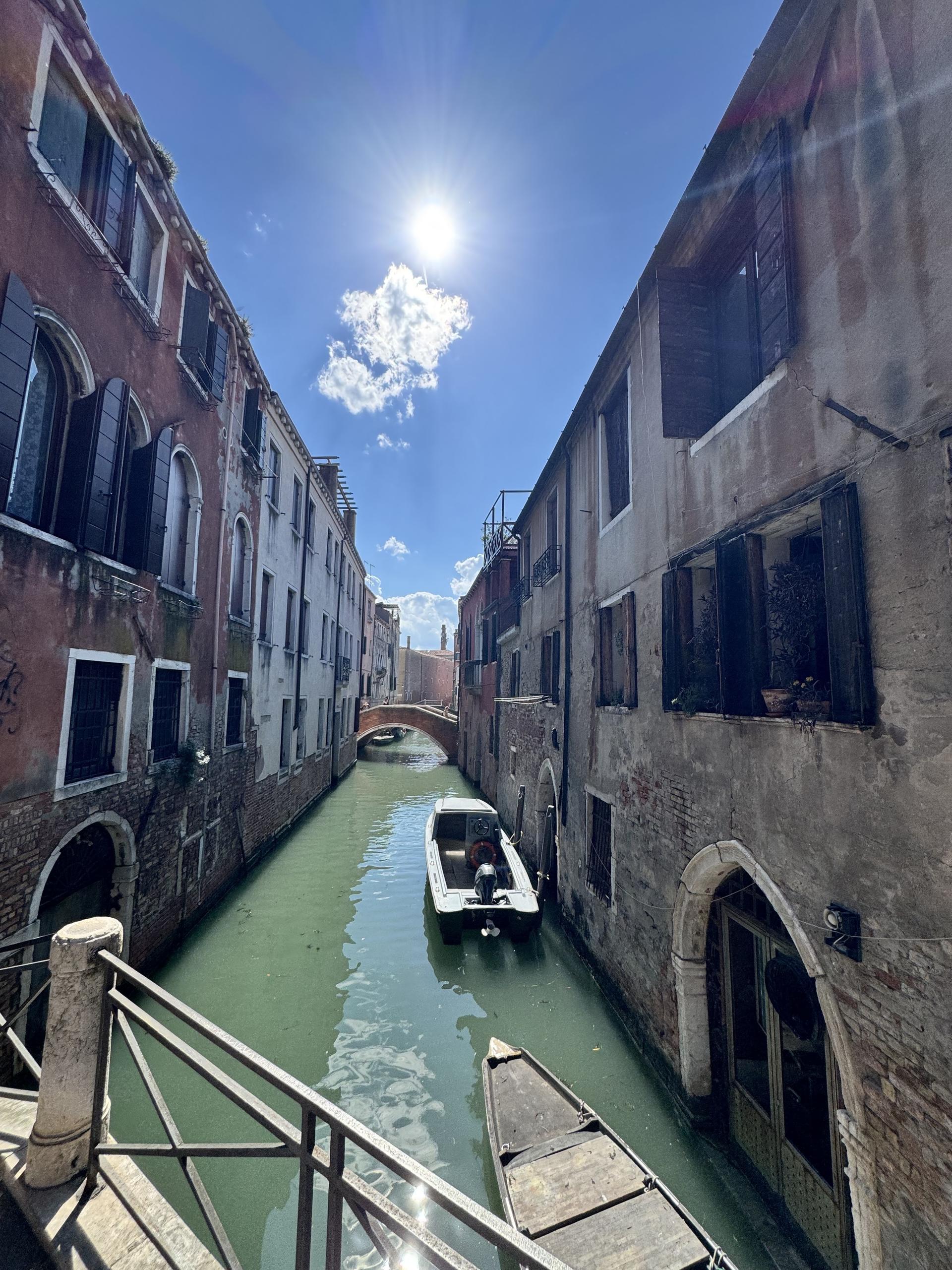
Boats in one of Venice’s many (many) canals.
|
Elsewhere, another visitor, lying prostrate on a wooden bench, was being gently stroked by another whitecoat with something that looked like a horse’s tail. He was clearly enjoying it, maybe even a little too much. Here’s the thing; the furniture was pretty damn cool. I may have missed the point. We all have to find our own level with contemporary art. Much of what I saw in Venice was uplifting, disturbing, amusing, inspiring, or simply astounding. Which means it worked on me.
Fortunately, I was in Venice not for the Biennale itself, but a more laid-back cultural event with Golden Goose and the brand’s HQ in Marghera. It’s just a short boat- and car-ride away from Venice on the mainland in a once-blighted industrial area now undergoing optimistic regeneration. There, the brand has the benefit of plenty of room to showcase both its products and the Golden Goose Haus, a Biennale-adjacent, art-inspired exhibition and event space launched three years ago.
|
|
|
|
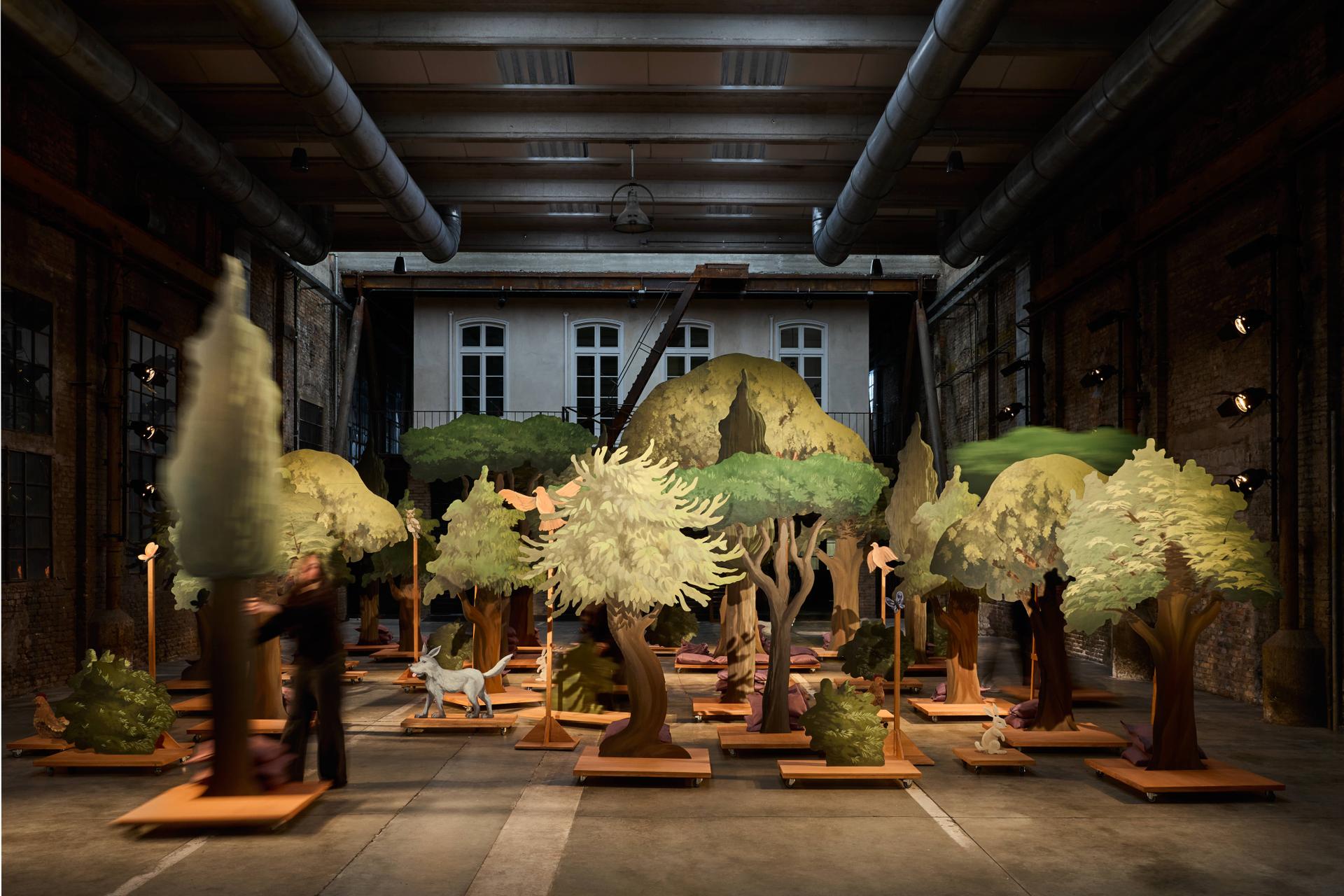
The Wood for the Trees at Golden Goose HQ.
|
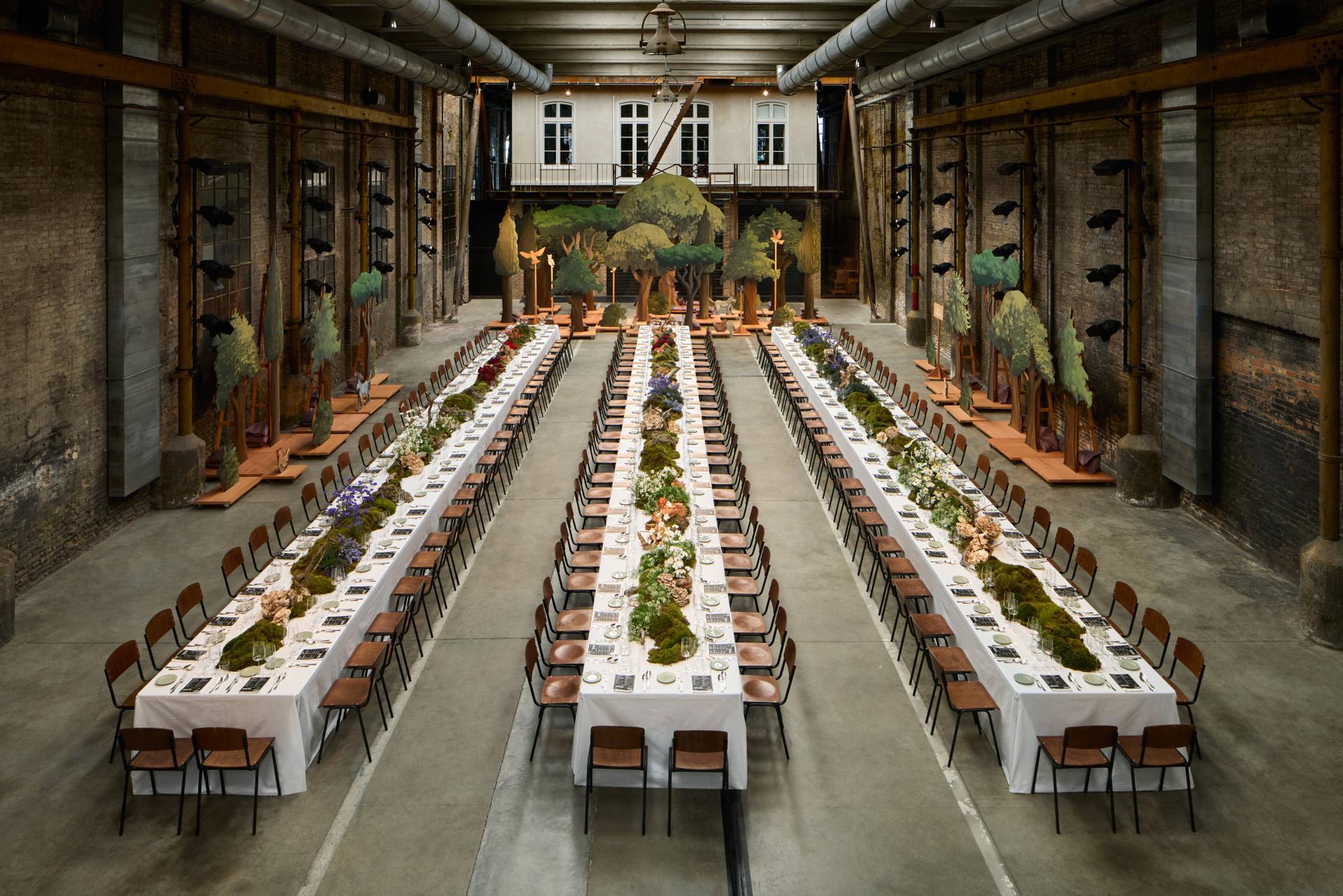
At Marghera, Golden Goose hosted PlayLab, the L.A.-Based multi-disciplinary production company that describes itself as a studio with no focus, whose previous achievements include ad campaigns, books, happenings, exhibits, films, retail spaces, and furniture as well as ideating the late Virgil Abloh’s Louis Vuitton men’s runway shows. For Golden Goose, the creative duo of Archie Lee Coates and Jeff Franklin curated The Wood for the Trees, an immersive hymn to nature in sound, art, and images, culminating in a life-size forest looming over long, refectory-style dinner tables decked out with arboreal decorations and laden with organic woodland food created by Michelin-starred Reggio Emilia chef Emilio Da Gorini. Golden Goose injects contemporary cool into the Venice art experience. The Wood for the Trees was a step up from bring stroked by a horse’s tail.
|
|
|
|
Another look at The Wood for the Trees.
|
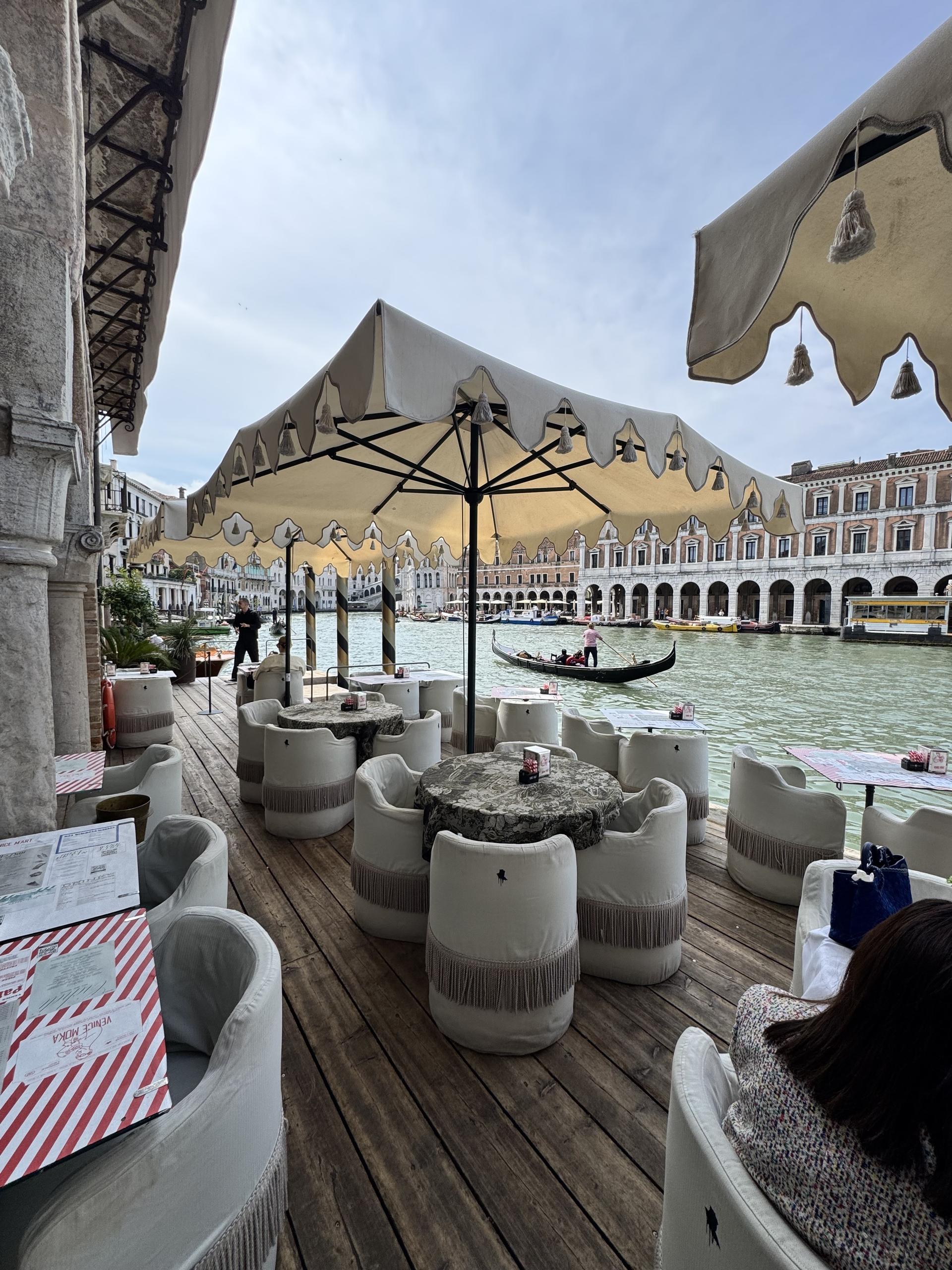
Also on the Golden Goose agenda was Venice Venice, a luxury hotel created five years ago by the brand’s husband-and-wife founders Alessandro Gallo and Francesca Rinaldo. It’s an intentionally contemporary hotel in this old city, set with in the stellar 13th-century Palazzo Ca’ Da Mosto, close to the Rialto Bridge. Breakfast at its Venice M’art café (no one could explain the apostrophe to me), on the terrace with the waters of the Grand Canal lapping at one’s feet, is a great way to watch the city float by. Had I been there three days later, I’d have been able to watch a flag-waving armada of boats churning their way under the Rialto Bridge to celebrate the promotion of the Venezia football team, VFC, to Italy’s Serie A league. Had it happened 300 years earlier, Canaletto might have painted the joyful chaos in oils.
|
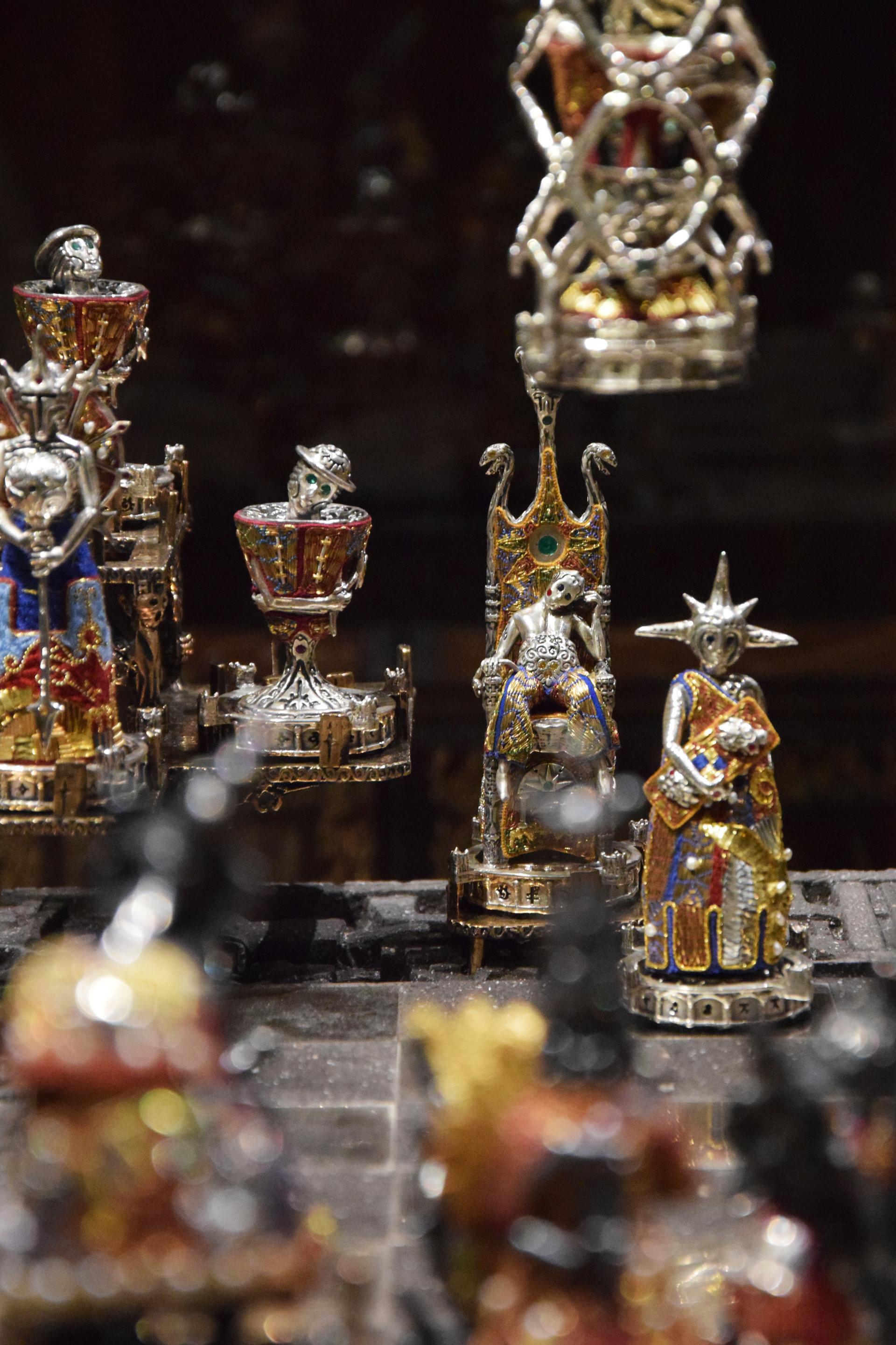
L'Échiquier des Songes (2026) by Joseph Arzoumanov at the Fondazione Dries Van Noten.
|
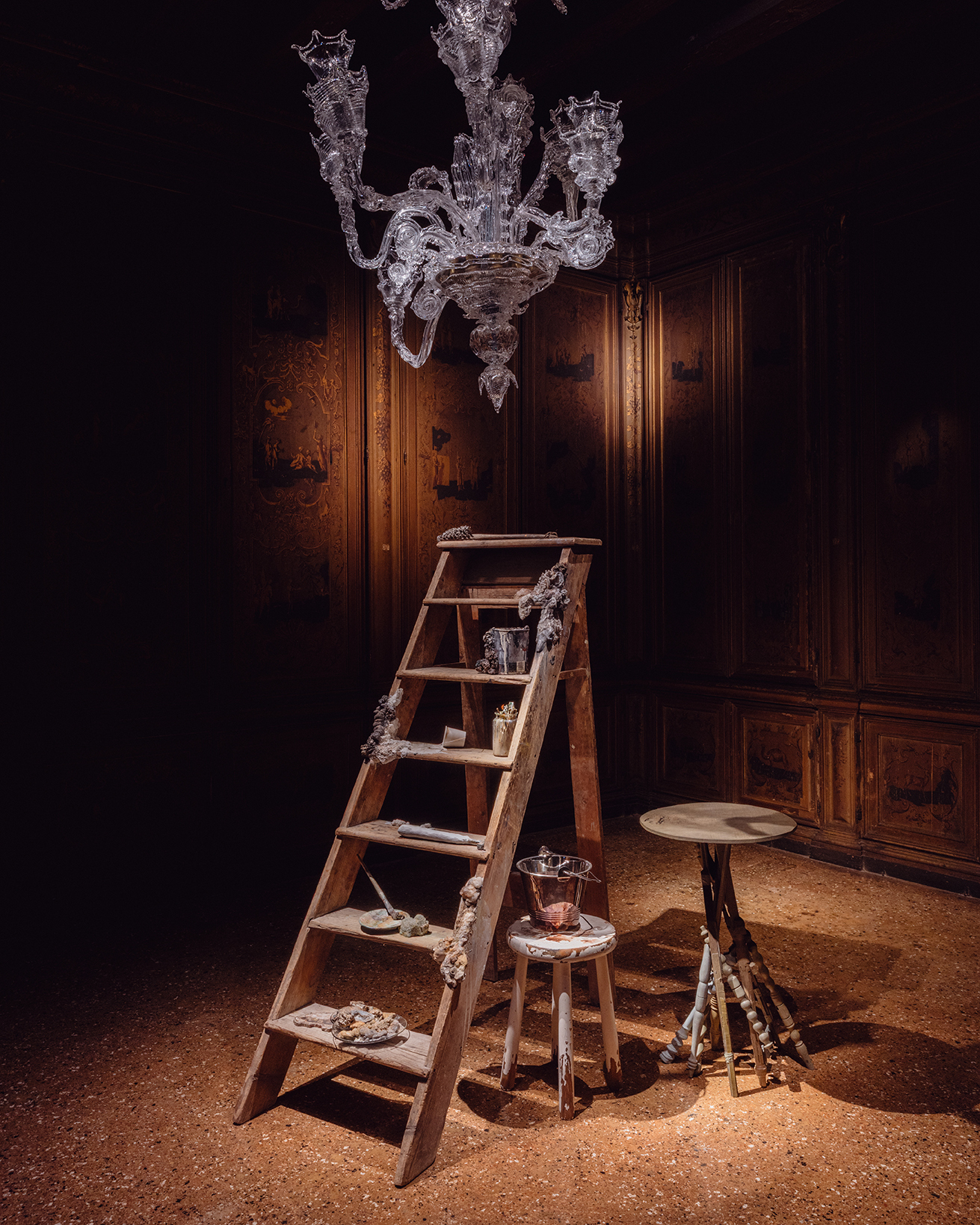
When does craft become art? That was the motivating question for another highlight of Venice, and one I’ve been looking forward to seeing since it was first announced last fall. The Fondazione Dries Van Noten, housed in his recently acquired 15th-century Palazzo Pisani Moretta, is the legendary Belgian designer’s first gig since relinquishing creative control of the fashion empire he founded way back in 1986. The inaugural exhibit—The Only True Protest Is Beauty—celebrates the hand-made and the products of human ingenuity and skill. In a succession of rooms, mannequins displaying some of Christian Lacroix’s most ornate couture pieces from the 1990s stood alongside pieces that straddled the divide between craft and art. There was glass and silverware, gold jewelry, and fine ceramics, much of it as functional as it was beautiful. It came with a hefty contemporary twist while nodding to many of the ancient crafts that have a spiritual home in La Serenissima (or “The Most Serene,” the traditional nickname for Venice).
|
Chandelier (2025) by Alexander Kirkeby at the Fondazione Dries Van Noten.
|
|
|
|
The only bit of serious travel advice one can ever give about Venice—apart from visiting the Fondazione Dries Van Noten as soon as possible—is to go out of your way to get lost. Oh, and avoid San Marco. The epicenter of Venetian tourist life, the Piazza San Marco is a year-round tide of tourists lined up for the Doge’s palace or the Basilica of St. Mark or pausing to look at photographs of pizza on the menu boards outside restaurants with pan-Italian culinary tropes. You’ll not find the epic local fegato alla veneziana (calf liver with polenta), or sarde a saor (sardines with vinegar, pine nuts, onion, and raisins) here, so you have to go out and look for them in the back streets. A coffee on the terrazza of Florian, looking onto the Piazza, meanwhile, can cost a staggering 10 Euros, or 16 Euros if the band is playing. Piazza San Marco is, it’s fair to say, quite a lot better in November and December, when the tourists have gone and Venice is damp and gray and has a melancholy air worthy of Don’t Look Now, an altogether different vision of Venice.
|
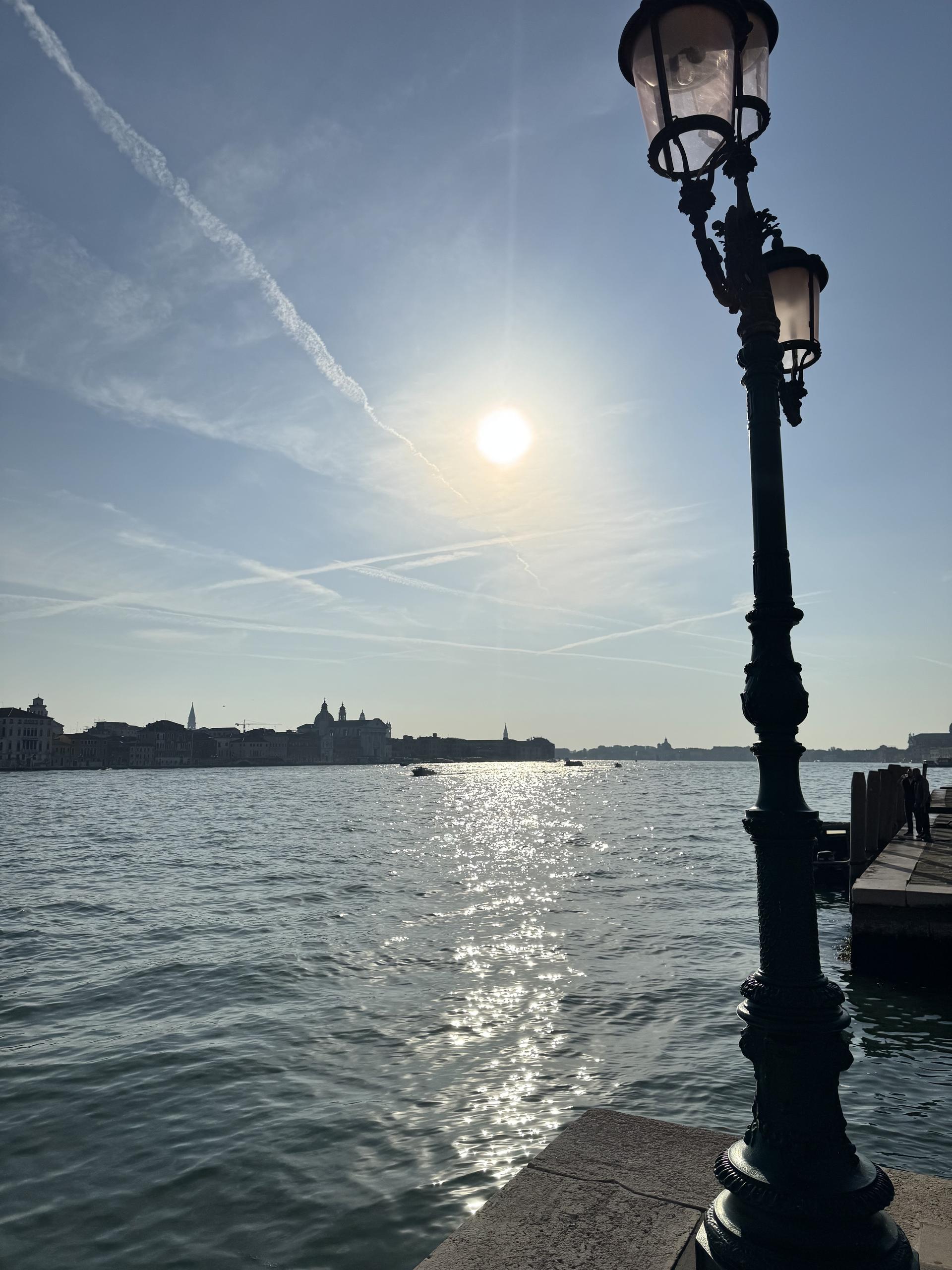
Fortunately, the weather was just right for wandering.
|
Best, in the end, to give San Marco a wide birth and explore in San Polo (home of the famous fish market), Cannaregio, and Dorsoduro, which have all the charm, lots to look at, and far fewer turisti. The famous Rialto bridge between San Polo and San Marco is a tourist hotspot and, because of its position (unless you want to swim) is a necessary evil in navigating one’s way to Cannaregio, on the north side of the city. It is by far the nicest and most peaceful district, where you feel you are truly among the locals. My only other advice is familiarize yourself with the Vaporetti, the city’s crowded public waterbus service. It is byzantine in its complexity just because well, water, but a three-day unlimited ticket bought online for about 35 Euros and redeemed at a machine at most vaporetto stops means you can hop on and off anywhere you please, even if it’s completely the wrong place. And who cares? Like I said, there’s no better place to get lost.
|
Thanks for reading this week’s Big Black Book newsletter. See you in a couple weeks. Until then, feel free to drop me a note at nicksullivanesquire@hearst.com.
- Nick Sullivan, creative director
|
Did someone forward you this email? Sign up here.
|
|
|
|
|





No comments:
Post a Comment