I didn’t realize I had a micropenis until I was 12, even though my penis was only one inch long when flaccid. Until then, I’d never been naked around other guys. I only realized I was different when I was changing before PE class. There were probably 20 other boys in the locker room, and I noticed that their penises were significantly bigger than mine. Some of them smirked and said, “It must be cold in here.” The comments stung. From then on, I made sure to change into my gym shorts quickly.
I was determined not to let anybody else see my dick, so I decided not to date during high school. I wasn’t exactly popular, but I did have a few opportunities. I just never took them.
|
|
|
|
What do we want from biopics about pop stars?
Are we looking for a thorough and thoughtful retelling of the life of an important historical figure? A psychological examination of a creative force? Or do we just crave a celebration of music that we love and an opportunity to revel in songs that may have changed our lives?
The allegations and trials that defined the final decades of Michael Jackson’s life are nowhere to be found in this new film. And how you feel about the movie—and about the purpose of biopics in general—is likely to come down to that absence.
|
|
|
|
The room is too small for him. Even when he’s sitting, his presence overwhelms the space almost comically. Fernando Mendoza, the improbable national champion, unquestioned Heisman Trophy winner, and soon-to-be number-one NFL draft pick, is immured in a conference room in an office park in Irvine, California, at Excel Sports Management, the agency to which he has entrusted his future, talking about the daily drills and exercises he’s doing to make himself a better quarterback. There’s an idle flat-screen hanging on one wall, a whiteboard and some dry-erase markers, errant water bottles, and an Office Depot table with swivel chairs, one of which he is swiveling in.
Mendoza is explaining how he’s handling what they call the fishbowl, through which masses of people are watching him, analyzing him, prognosticating about him, doubting him, praising him, and expecting unreasonably high achievements from him at an age when he still gets carded. These masses include football fans broadly, of course. In his case, more specifically, they include fans at Cal, who wish he’d played all four years there instead of just two; fans at Indiana University, where he transferred for the 2025 season, his final year of eligibility, the year that made him; the front office of the Las Vegas Raiders (including part owner Tom Brady), the team that appears certain to draft Mendoza with its number-one pick; Catholic and Cuban American communities back in Miami, where he grew up; TV analysts and online columnists; and stud high school quarterbacks in every corner of America who believe they too might rise up to become a star through hard work and prayer.
|
|
|
|
A$AP Rocky sits one leg inside his cherry-red GTC4Lusso, one leg outside it as he tinkers with the sound system. The plan is to play his at-present-unreleased album Don’t Be Dumb for me on the drive from a Brooklyn studio.
But Rocky can’t get his phone to sync with his sports car. He’s determined, though, and while the engine growls at low idle, he tinkers for minutes that feel much longer. But still—no dice. He calls over one of his two bodyguards, both of whom are affable as far as dudes who protect celebrities for a living go. One of the bodyguards pushes a button here and twists a knob there and, bada bing, Rocky’s album at last begins playing on the Ferrari’s speakers. Rocky and I jump inside. The car’s tan leather is taut Hollywood skin, and its instruments look borrowed from the near future.
We drive across the Brooklyn Bridge, one of the many New York landmarks built by immigrant labor, in this case scores of Irish immigrants who’d fled the famine, the Irish back before they became white. Rocky, whose father is a Caribbean immigrant, keeps the tunes playing as we hit the West Side Highway. Our driver, another one of Rocky’s guards, dodges potholes and weaves between traffic as we follow the Ferrari, a two-car caravan, the cabin fragrant with weed. Rocky raps along to certain verses.
“I’m goin’ to leave my print,” he says. “We in the building, my nigga. Not just a tenant.” Then, a few moments later, says, “When I pull up to your crib, spend it like the rent. Spend it like the time you ain’t spending with your kid,” which is a jab at every half-assed or absentee father and begs, if the designer shoe fits...
|
|
|
|
Lee Sung Jin thinks about cycles. The Beef creator knows how life loves to give us different flavors of the same problem, over and over again, even when we think we've figured it all out. How every generation faces similar challenges—no matter how said generations love to punch up and down to another era—because money, family, and work always tend to get in the way of a happy life. And if, along the way, you happen to find a shred of peace? Well, another cycle is right around the corner.
So is there any hope of breaking the cycle of cycles—or a way to pause it all? For Lee, there's hope in the eyes of his one-year-old daughter, who was born in the middle of shooting Beef season 2."Time stops when you're with your kid," Lee tells me over Zoom, about a month before Beef's return to Netflix. "This season of Beef is so much about cycles and this eternal trap of samsara that we're all in. And you look at your kid and there's hope, you know?"
|
|
|
|
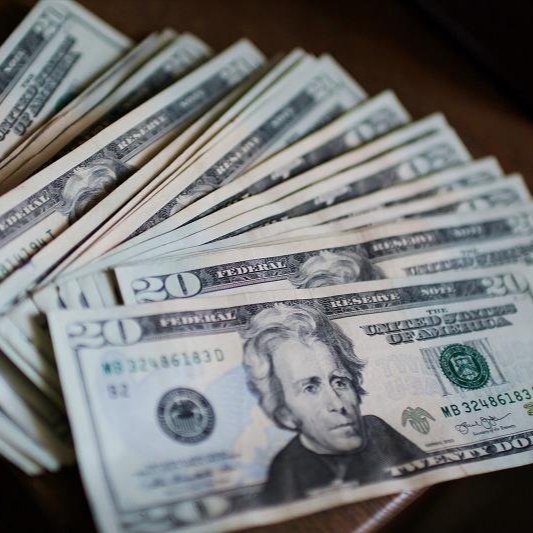
When it comes to the language of money, credit cards are nouns. Dull, concrete, limited by rules and restrictions and creepy fine print, credit cards have all the élan of aluminum foil. Personal checks — the coward's stand-in for cash — are ugly and static pronouns. But a twenty-dollar bill, now, that's a thing of beauty. Nothing static about a twenty. Used correctly, a twenty is all about movement, access, cachet. Forget the other bills. The single won't get you much more than a stiff nod and, these days, the fin is de rigueur. A tenner is a nice thought, but it's also a message that you're a Wal-Mart shopper, too cheap for the real deal. A twenty, placed in the right hand at the right moment, makes things happen. It gets you past the rope, beyond the door, into the secret files. The twenty hastens and chastens, beckons and tugs. The twenty, you see, is a verb. It's all about action.
|
|
|
|
|








No comments:
Post a Comment