Watches at the Edge of the World
|
The remotest land on earth is a remarkable place to explore new frontiers in watchmaking.
|
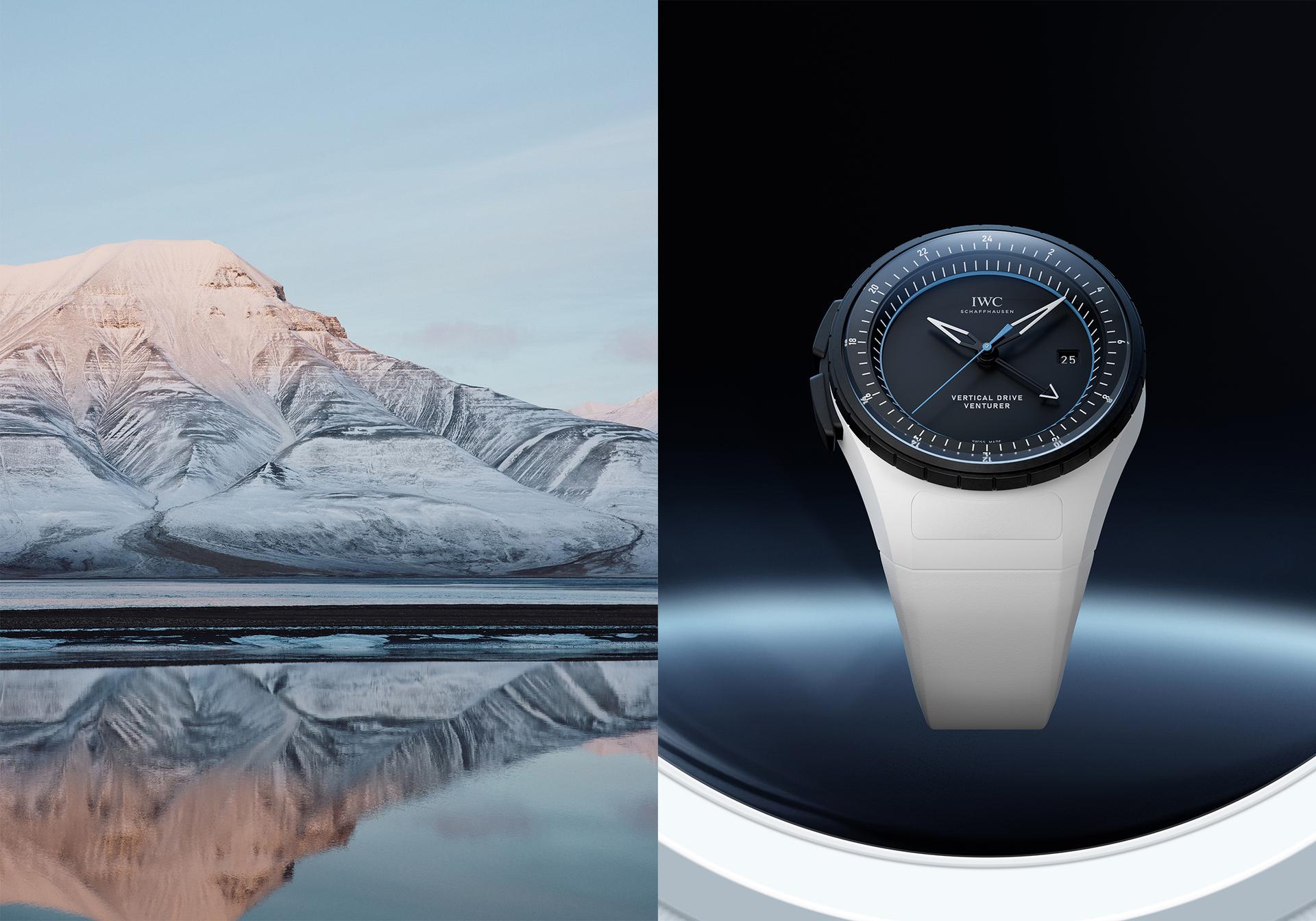
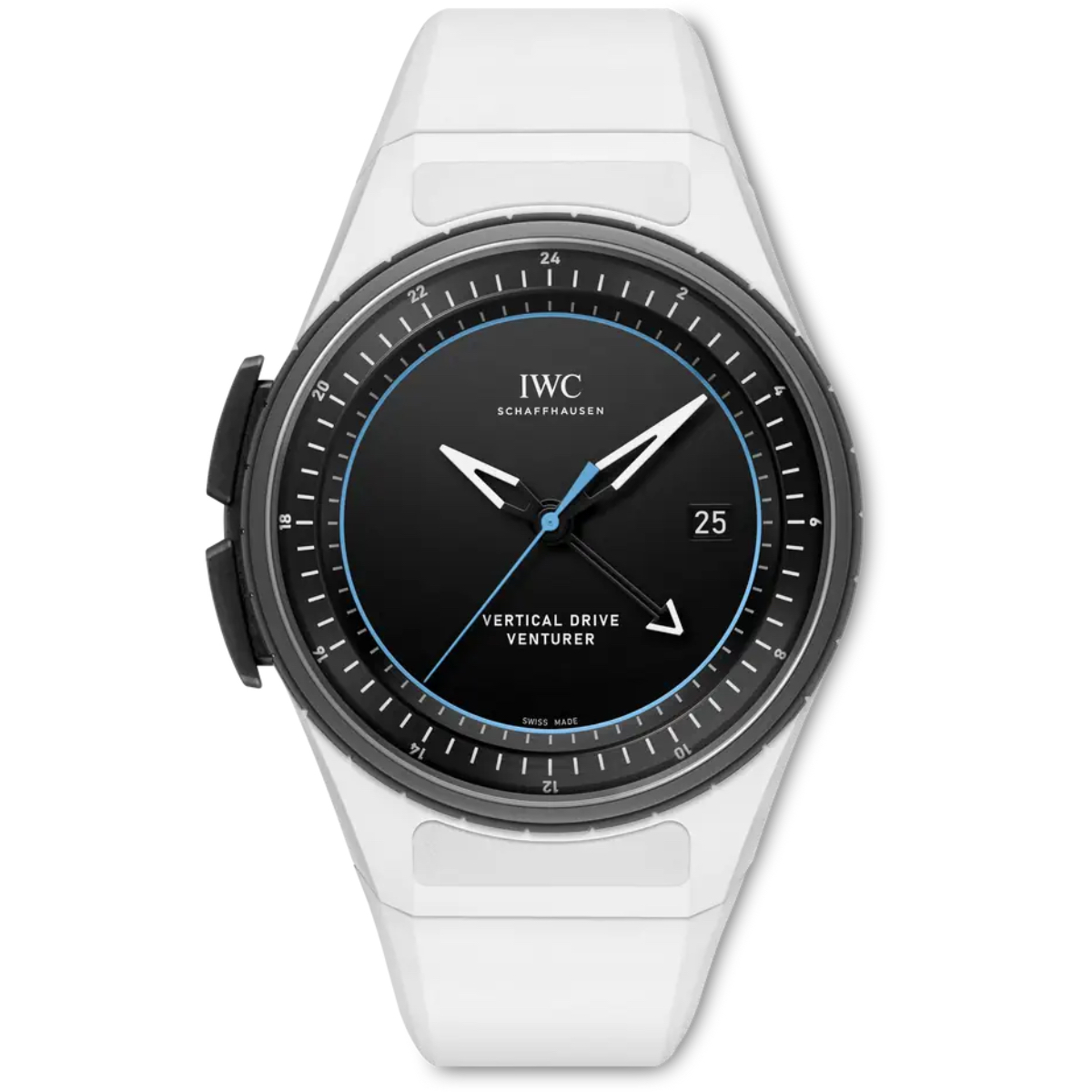
The Pilot’s Venturer Vertical Drive watch alongside the Svalbard landscape. (Photos: IWC, Ida Bjorvik)
|
There are few places that feel quite as far removed from anything on this planet as the Svalbard archipelago, about 650 miles from the North Pole and about the same from the northern coast of Norway (to which it belongs). It’s a vast, snowy, mountainous mass; its main town, Longyearbyen, is the most northerly permanent human settlement in the world. A handful of flights (capped at a maximum of six) arrive per day from Oslo and Tromsø in Norway—even fewer in the winter.
Last week, rather amazingly, I got to go there for the second time, courtesy of Swiss watch brand IWC. And I can tell you: It’s well worth the schlep.
Why Svalbard, you might ask? Well, last year, the veteran tool watch brand took a giant leap for watchkind when it launched its Pilot’s Venturer Vertical Drive watch, conceived to function in space with a groundbreaking twistable bezel that performs all the functions traditionally done by a crown, including time-setting and winding, which can be a fiddle with astronaut’s gloves on. The watch has been space-qualified by commercial space travel station VAST, and will make its first foray into space on the Haven 1 mission next year. For a brand rooted in aviation and navigational watches, space is a logical, if ambitious, next step. And in barren, otherworldly Svalbard, you might as well be on the moon.
|
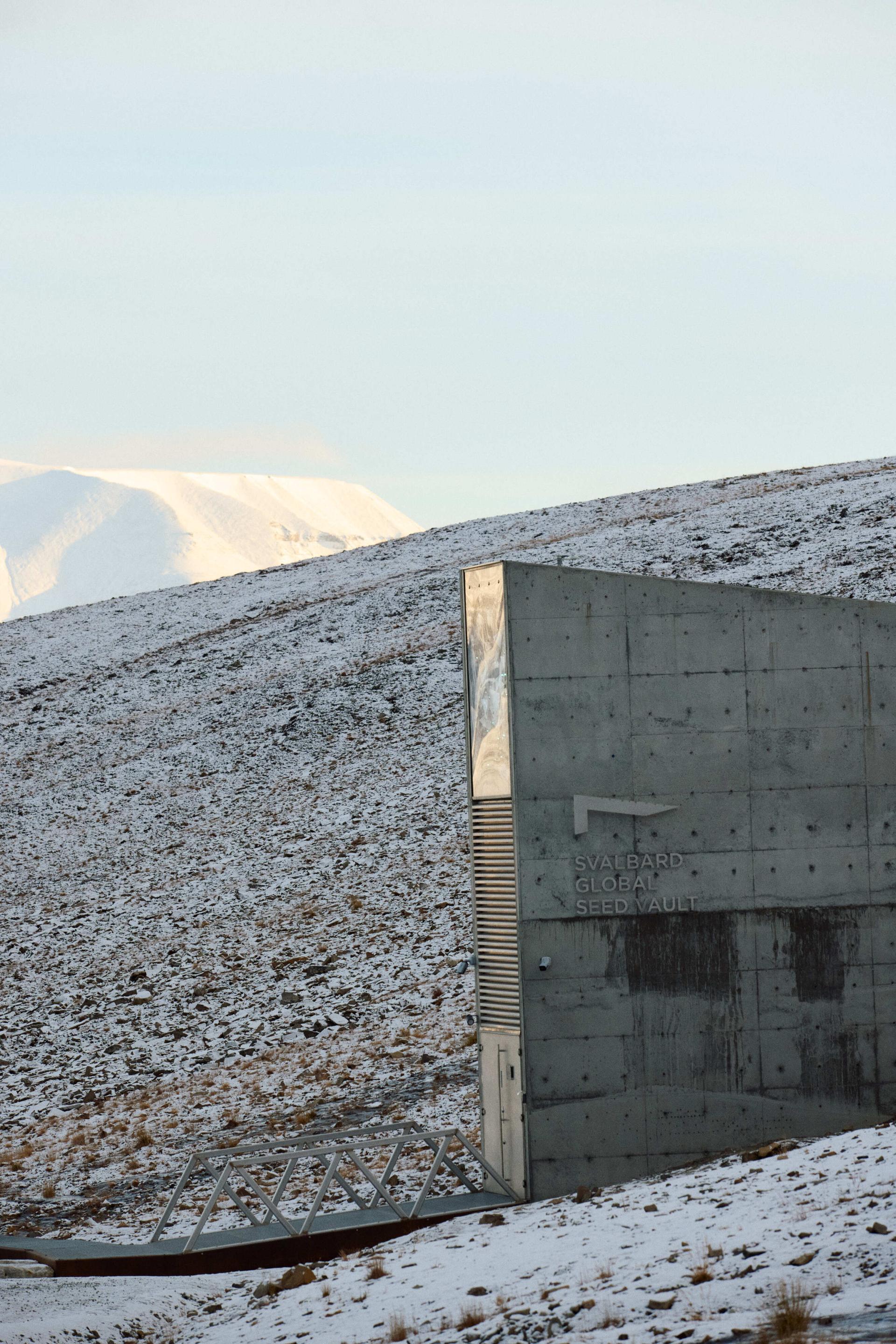
The Svalbard Global Seed Vault. (Photo: Stephanie Sikkes)
|
Longyearbyen is a location overshadowed by its recent coal-mining past. The last Norwegian-operated coal mine shut down last year out of environmental concerns, but the landscape around Longyearbyen is still marked by the vestiges of an aerial cable-car system built to ferry coal from seven mines into the harbour for shipping out. Though many have now lost the 8-ton skips and the cables that suspended them, giant pylons and elevated shacks stud the snowy slopes, lending the town the dystopian look of an extinct industrial amusement park. Just one mine, in the Russian-owned enclave of Barentsburg, still fuels its own local power station. There are no roads to it; you can only get there by snowmobile, or a boat in the summer.
If heavy industry is the past, nature and science are the future of Svalbard. NASA conducts space research and satellite monitoring in the thin northern air there, and a nearby hilltop complex is devoted entirely to studying the Aurora Borealis. In the bars of Longyearbyen, miners have given way to scientific researchers. Elsewhere, up a hill just past the airport, the Global Seed Vault stores millions of samples of agricultural seeds, protected below ground in a Bondian labyrinth dug deep into the permafrost.
|
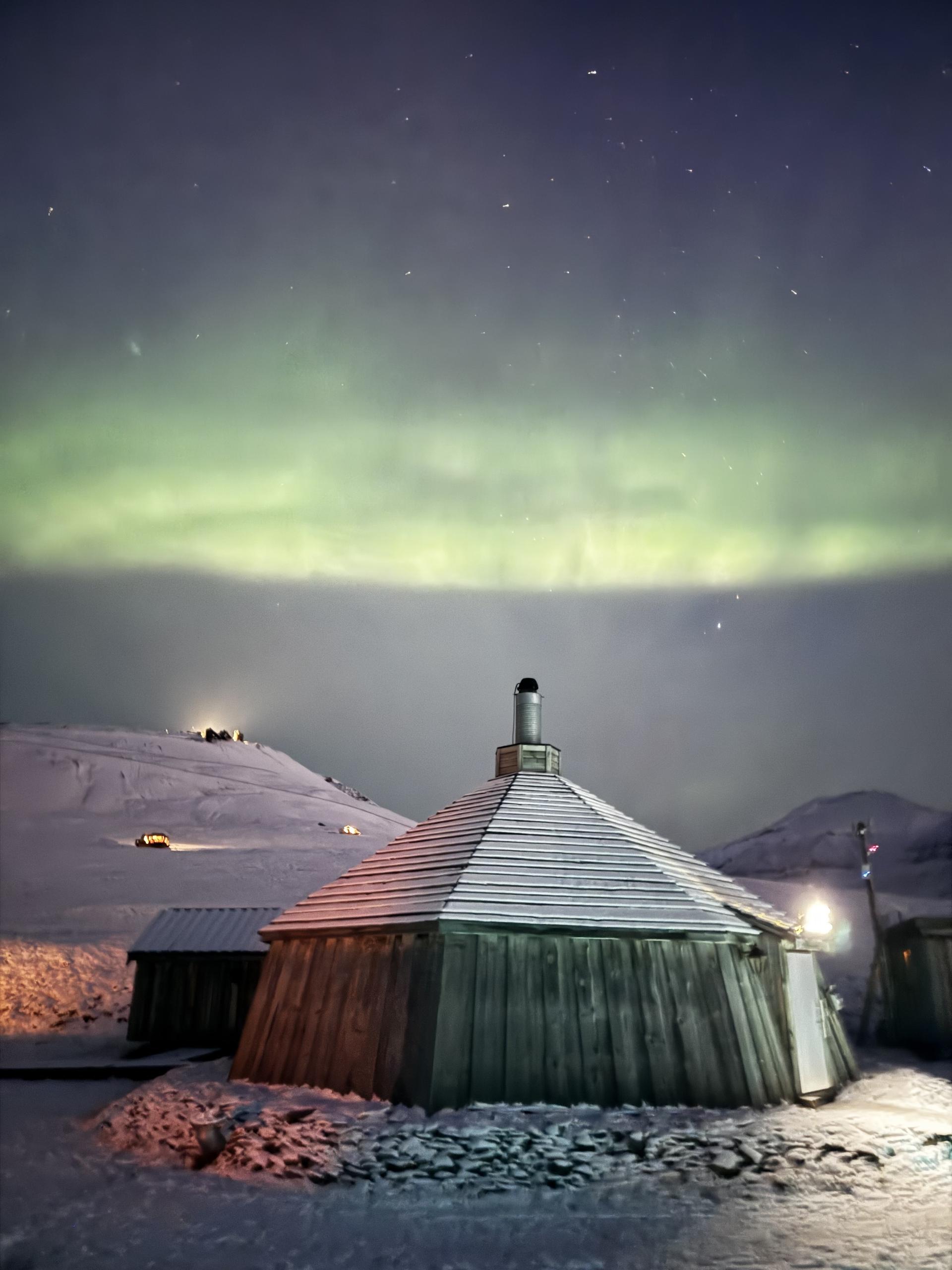
The Aurora Borealis over Svalbard. (Photo: Nick Sullivan)
|
Many of these facilities are closed to the public, so your best bet for a trip is to do what most normal visitors do. In mining’s wake, alongside all the science, Longyearbyen has become a destination, especially in winter, for outdoorsy thrill-seekers. Dog sleds, snowmobiles, and ATVs sweep tourist adventurers out of town into silent, blind valleys choked with snow. For most of winter, it’s pitch dark 24/7. At winter’s fringes—in October and February, arguably the best time to go—it’s lit by an eerie blue half-light for a few hours each day. The vague threat of polar bears (some 300 individuals are thought to live on the main island) only adds to the adrenaline rush.
Fortunately, encounters are relatively rare, but, just in case, no trip outside of Longyearbyen is permitted by law without at least two guides armed with hunting rifles, flare guns, and large caliber pistols (the last of these being “mainly for close-up work” according to Peter, our local guide on one snowy hike).
|
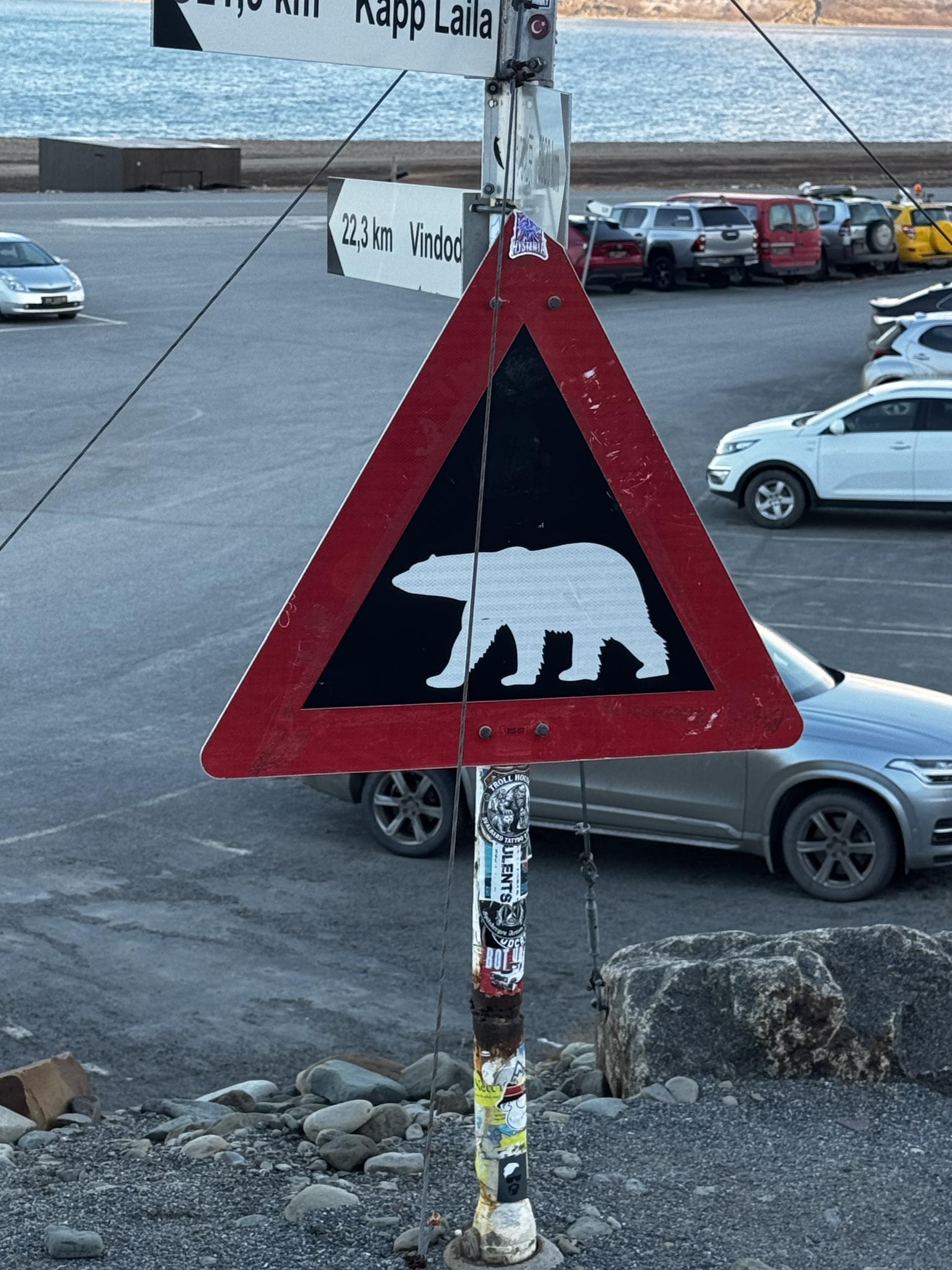
One of many polar bear warning signs around Svalbard. (Photo: Nick Sullivan)
|
We didn’t see a polar bear—I’m now 0 for 2—but the day we left the island, one was observed along the coast not far away. Earlier in the year, two were shot in separate incidents during encounters with cabins in more remote areas of the archipelago. The polar bear has a kind of elusive presence like the boogeyman. It isn’t there, but it’s not not there either—a ghostly talisman of Svalbard’s sheer wildness, its lumbering silhouette adorning everything from warning signs on the edge of town to backpacks, sweatshirts, and mugs in the local store.
If you’re ever lucky enough to come to Svalbard, there’s one more thing that should be at the top of your must-see list: the Aurora Borealis. I got a glimpse of that on a clear, cold Wednesday night at a dinner given by IWC in a wooden hut that’s a recreation of Dutch explorer Willem Barent’s first camp after he discovered the islands in 1596. In a display lasting over an hour, the aurora did its magical stuff over our heads while we collectively forgot about dinner, fingers freezing to our phones.
|
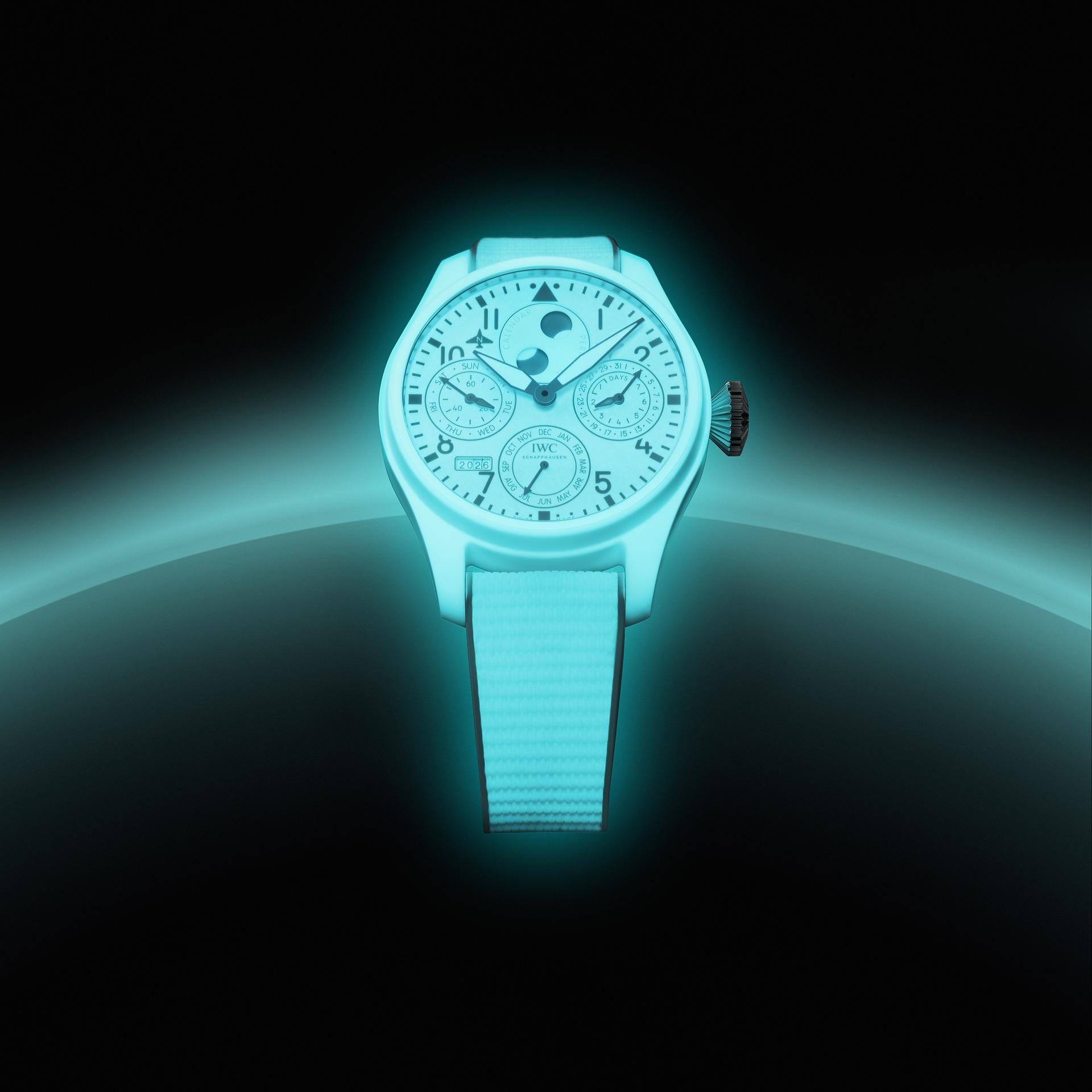
The Big Pilot’s Watch Perpetual Calendar Ceralume. Yes, everything glows in the darkness. (Photo: IWC)
|
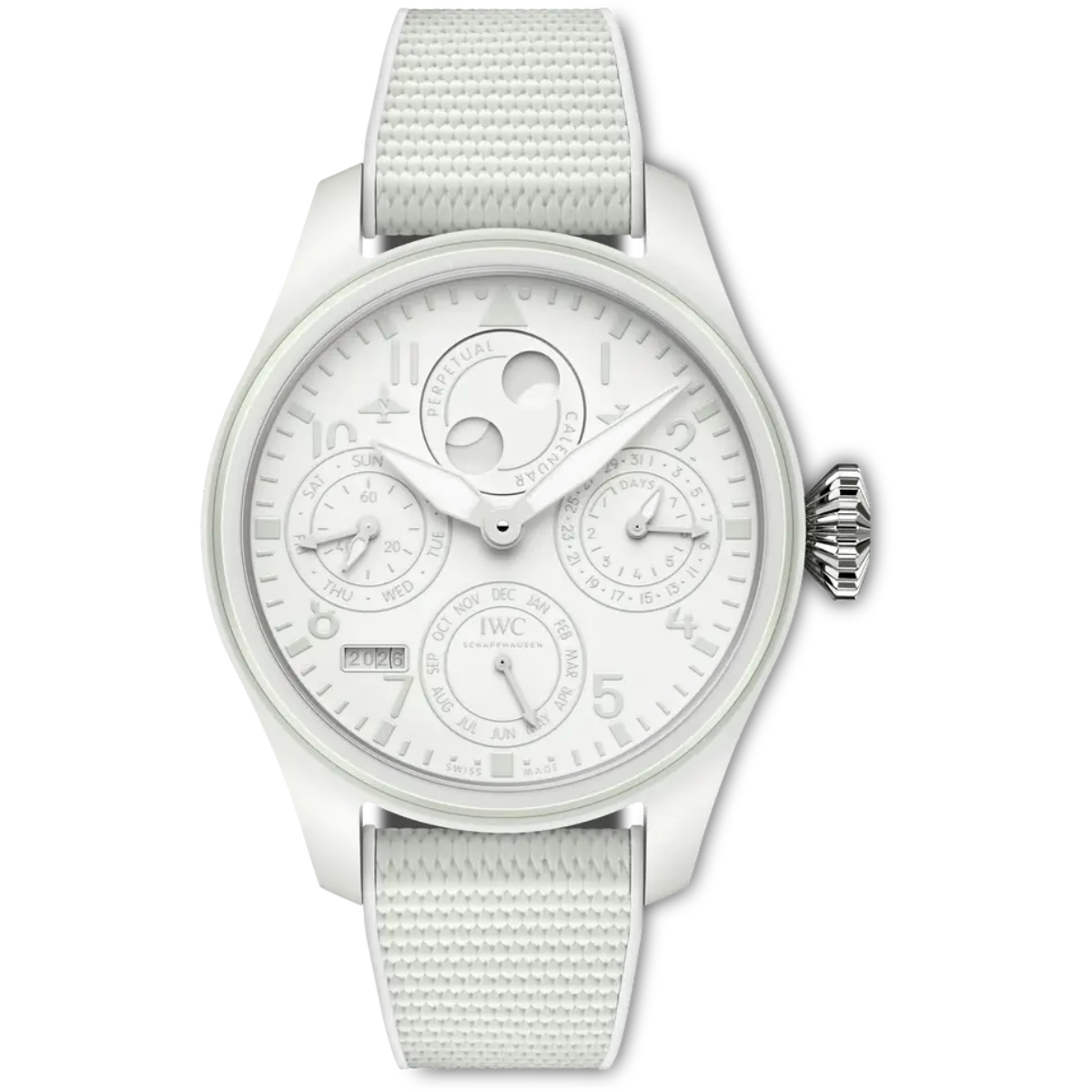
One of the many IWC watches on hand for us to play with under the night sky was the Big Pilot’s Watch Perpetual Calendar Ceralume, launched back in April. Its entire case, dial, and even strap emit a bright blue luminescence so magnificent in the half-light that at times it threatened to upstage nature’s own glowing display above our heads.
One final surprise in this windswept outpost was Huset, a recently revamped restaurant on the edge of town that bills itself as the northernmost fine-dining establishment in the world. Its menu—composed by Spanish head chef Alberto Lozano Aviles and his international team—is largely and rather ingeniously built from locally foraged plants and meats (sea kelp, salsify, seal, reindeer, and even ptarmigan, an Arctic relative of the grouse). It’s proof that there is inspiration—and flavor—even at the ends of the earth. Book early.
|
|
|
|
Thanks for reading this week’s Big Black Book newsletter. See you in a couple weeks. Until then, feel free to drop me a note at nicksullivanesquire@hearst.com.
- Nick Sullivan, creative director
|
|
|
|
Did someone forward you this email? Sign up here.
|
|
|
|
|






No comments:
Post a Comment