Time to Switch to Grown-Up Shoes
|
Summer is great for sneakers, but fall is the perfect season to bust out something polished, proper, and built to last.
|
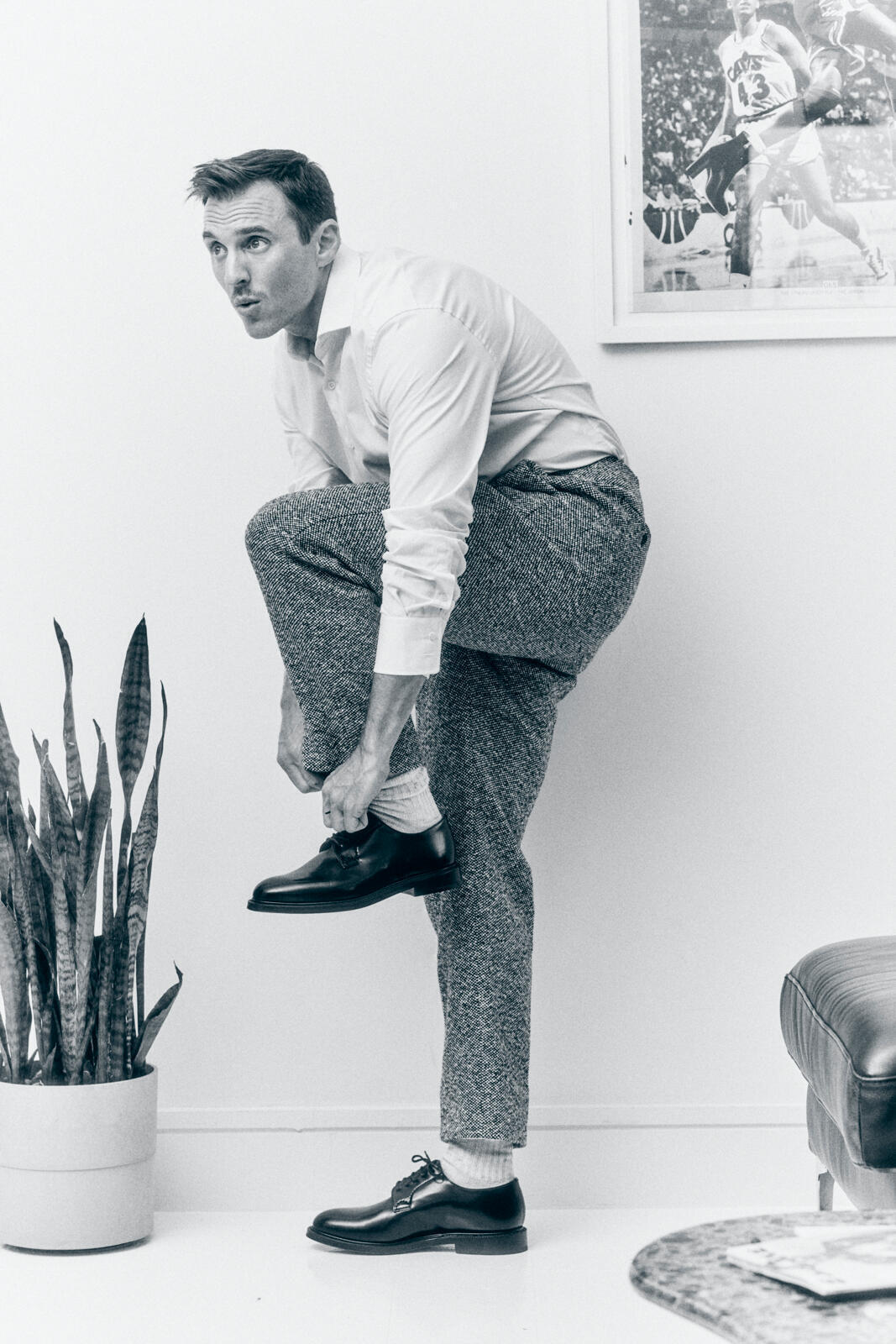
Now’s the time to lace up, folks. (Photo: Ryan Slack)
|
When it comes to shoes, I’m a creature of habit. And it’s a sneaker habit. For half the year I can get by just fine in sneakers, only dipping a toe into dressier, heavier shoes when the occasion absolutely demands it. But when the first welcome hints of fall arrive—and along with them, the rain—there’s a certain joy in breaking out the chunky brogues or the derbies once again and stepping into the reassuring heft of serious leather.
Unlike sneakers, which at best have a shelf life of months, well-made shoes can last for years, so you can come back to them again and again. Longevity is built in, and that makes them a great investment. Done right, benchmade shoes are designed to perform in much wetter climates even than NYC and often with technology—if you can call it technology—that’s as old as the hills. Wet hills. My oldest pair of Oxfords, by Edward Green, for example, were made in 1992. The cognac leather has patinated nicely, the soles have been redone a few times, but they’re still going strong, though I wear them sparingly and keep them on their original shoe trees.
Much as I love the ease of sneakers, I still appreciate the elevating look of a proper shoe. Even when I’m dressed casually, which these days is most of the time, a dress shoe will instantly smarten me up.
When it comes to robust leather shoes, all roads lead (if occasionally in a roundabout way) to the county of Northamptonshire just south of Birmingham, where many of the oldest names in British shoe making still have their factories. It’s a part of the country that was ideally located for its proximity to both the ingredients used in tanning (wood bark, water) and, helpfully, a lot of cows. Even the best and brightest in American and Italian men’s shoemaking owe their aesthetics to English shoes. So, with one notable exception, I thought I’d focus this week on the good things still emanating from Northamptonshire.
|
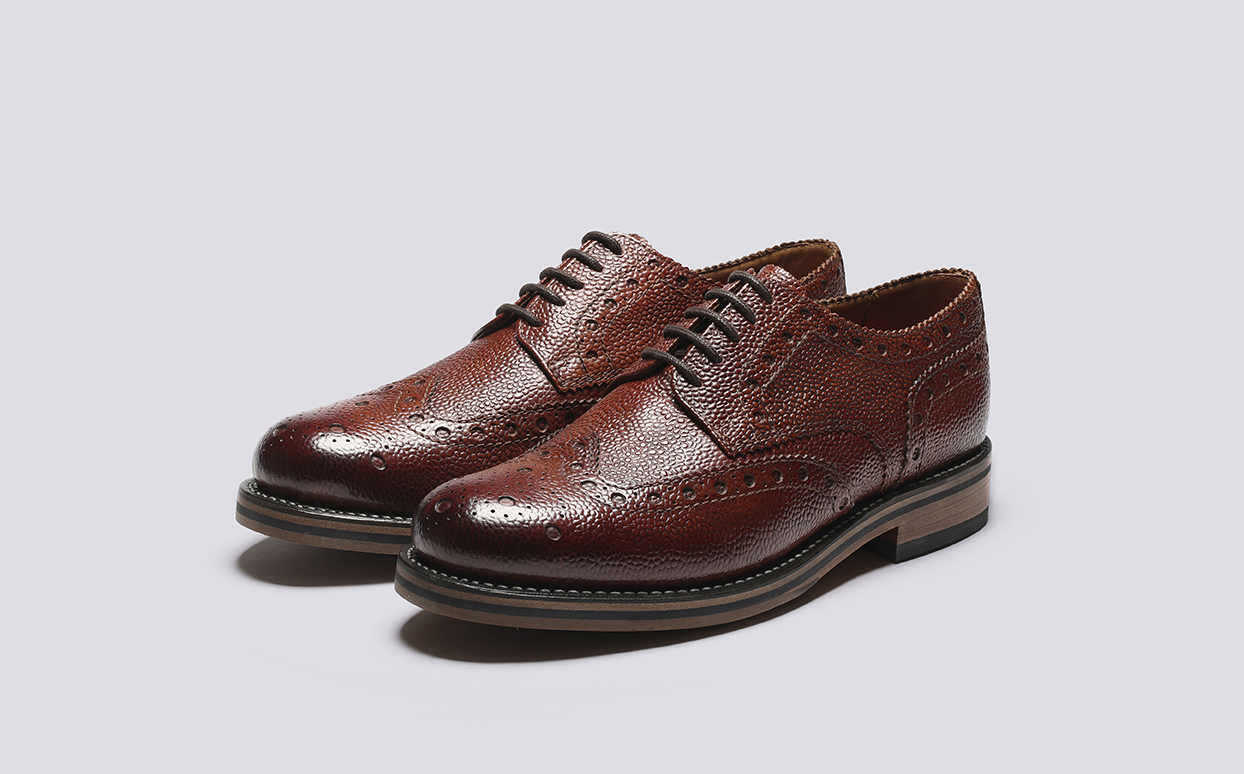
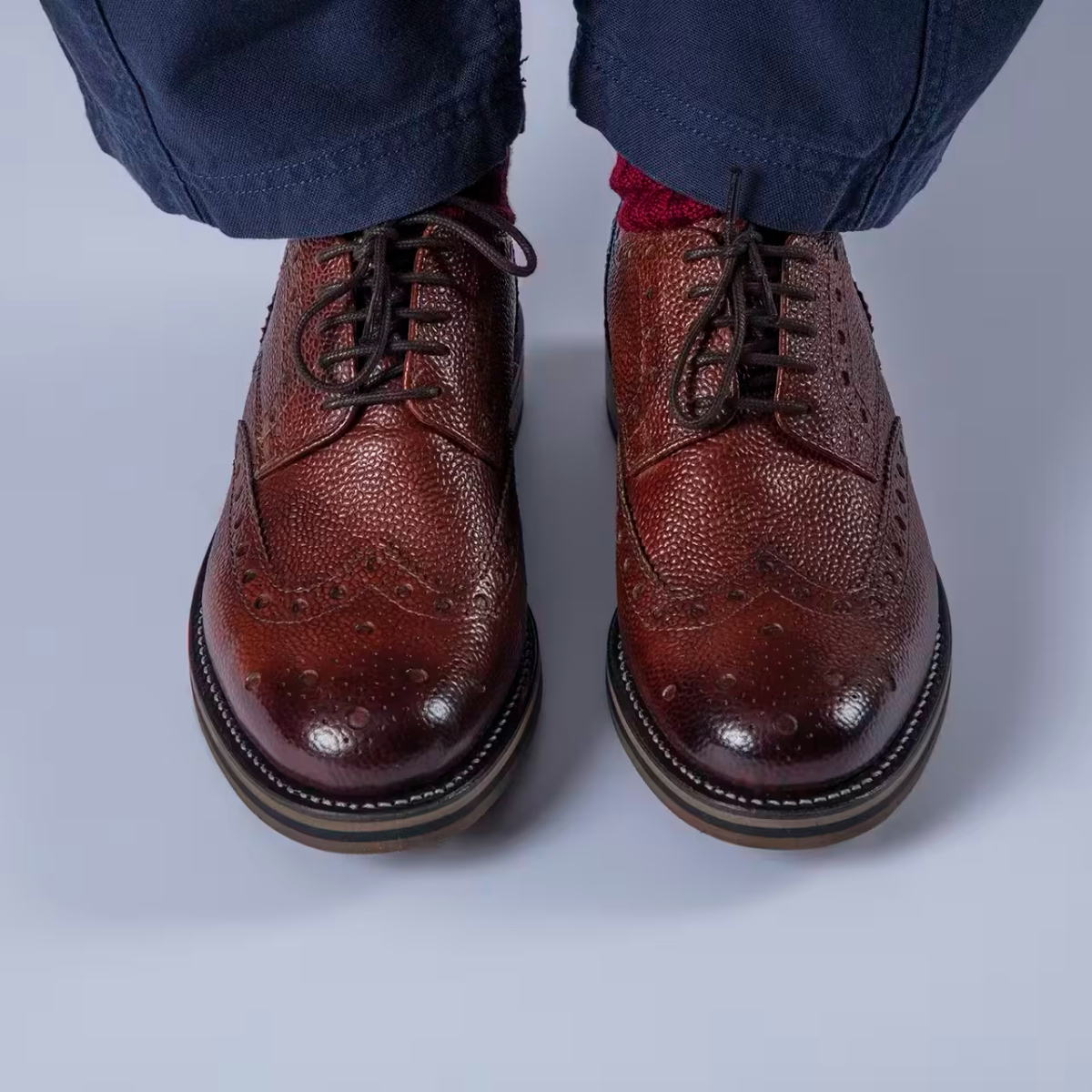
The brogue was once the quintessential gentleman’s country shoe, synonymous with tweeds and wet labradors. But it is equally at home in the city paired with selvedge jeans. Invented in boggy 16th century Scotland, according to legend, the holes were there to let the water drain from soggy lace-ups. Since shoemakers pivoted to keeping the water out in the first place, the pattern of holes has remained as a relic of that romantic highland origin. When Tim Little bought 160-year-old British shoemaker Grenson in 2010, front and center of his brand regeneration plan was the Archie, a solid-looking but remarkably comfortable brogue. The Archie is still one of the brand’s bestsellers, available with a classic goodyear sole and also with the brand’s premium triple-welt construction, which gives it even more heft and durability.
|
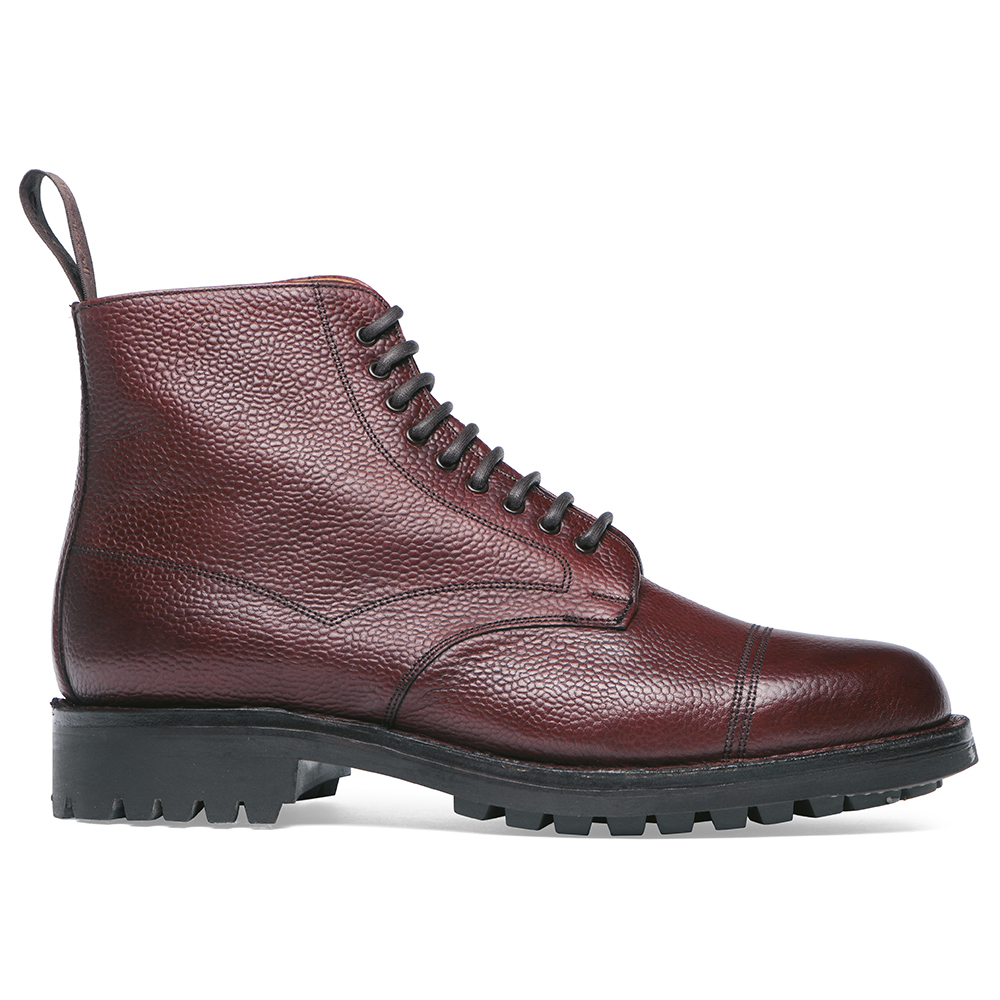
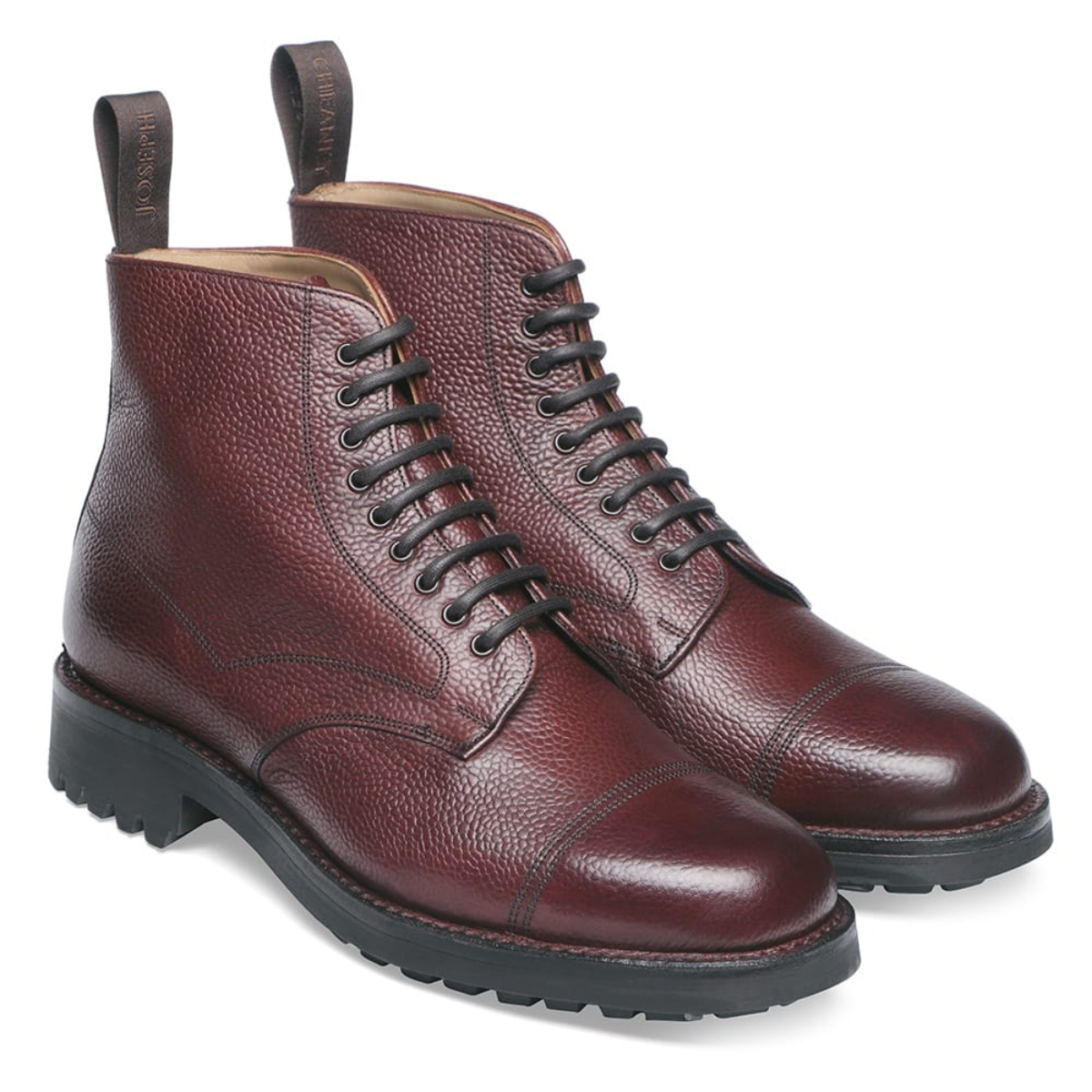
Cheaney Pennine II Pebble Grain Boot |
(Photo: Joseph Cheaney & Sons)
|
Joseph Cheaney & Sons has been making proper British shoes in Desborough, Northamptonshire since 1886. Now in the custodial hands of Jonathan and William Church, two descendants of a shoemaking name that is legendary in Northampton and worldwide (see below), Cheaney is worthy of your attention for its well-made and elegant shoes. Top of my Cheaney list, however, is a boot: the Pennine II pebble grain derby boot, complete with Dainite soles. The Derby construction makes it easy to pull on or off. And the rubber lug soles will give you grip in the muddiest of environments. On the technical side, the boot uses a Veldschoen (meaning field shoe in Afrikaans) construction, which is a waterproofing construction where the uppers are turned outward to meet the sole at the welt (rather than the inward as in a Goodyear-welted shoe). First observed in South Africa during the Boer War around 1900, the style caught on in Northampton as another weapon in the war against water ingress.
|
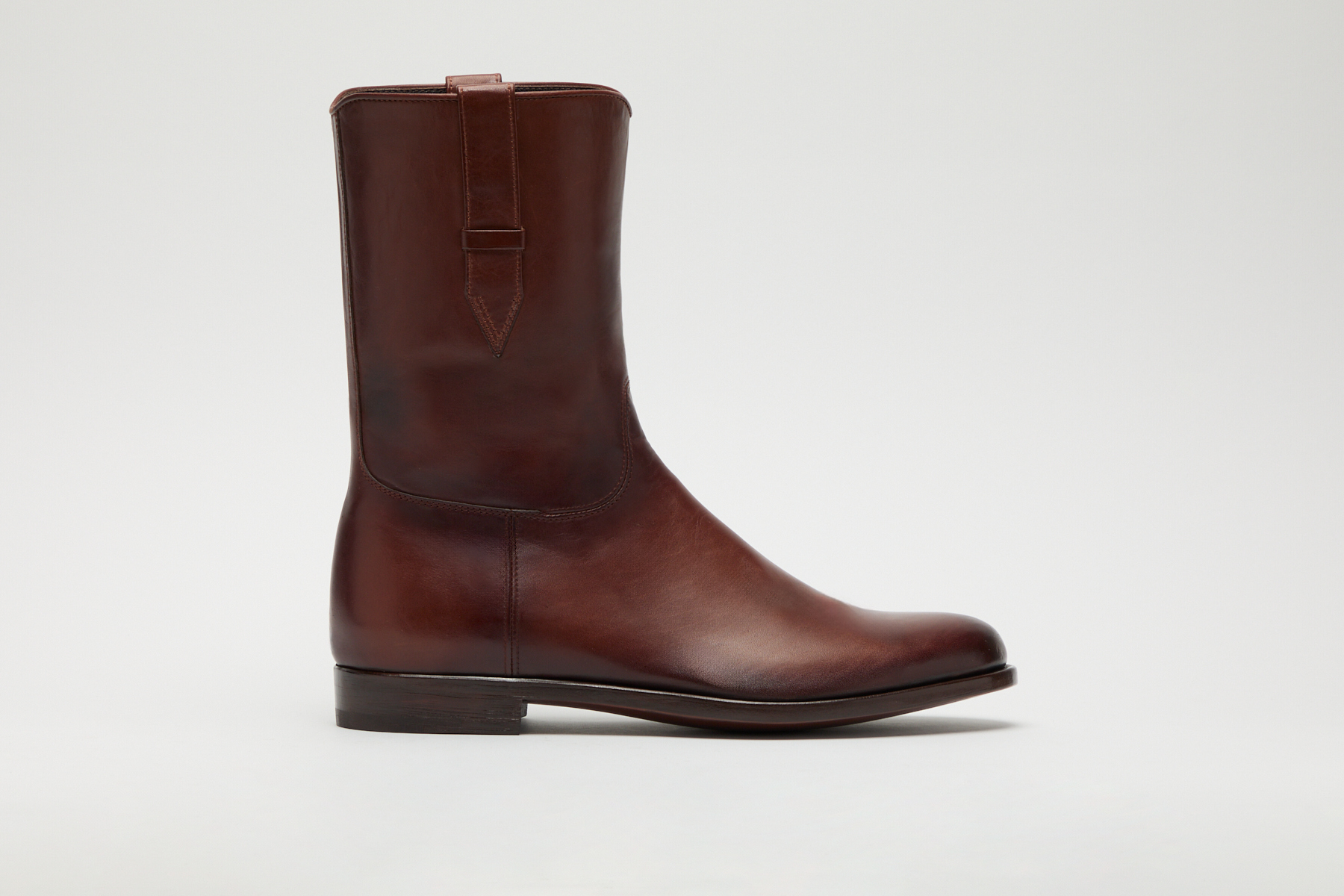
As a bit of a departure from the Brit vibe of this newsletter, shoe number three is another boot and chosen precisely because it’s not a style you’ll normally find in Northampton. New York brand Vogel was set up in 1879 on Wall Street, quickly growing to making everything from evening pumps to riding boots for Manhattan’s rapidly expanding client base. Now under new ownership and with Craig Schroeder as creative director, Vogel is for the first time making the Roper style of boot it once made exclusively for Paul Newman in the 1970s, following his own directions for a no-nonsense, comfortable work boot. Somewhere, stylistically speaking, between a biker boot and a cowboy boot (without the polarizing details), the Roper is a pull-on-and-go boot, with a distinctly utilitarian vibe offered by its flat mid-calf top, a rounded toe, and a flat heel. It’s made to order in brown “Ranch Hand” leather with a portion of proceeds going to the Newman’s Own Foundation. However, you can go full custom with suede, buffalo, kudu, and more.
|
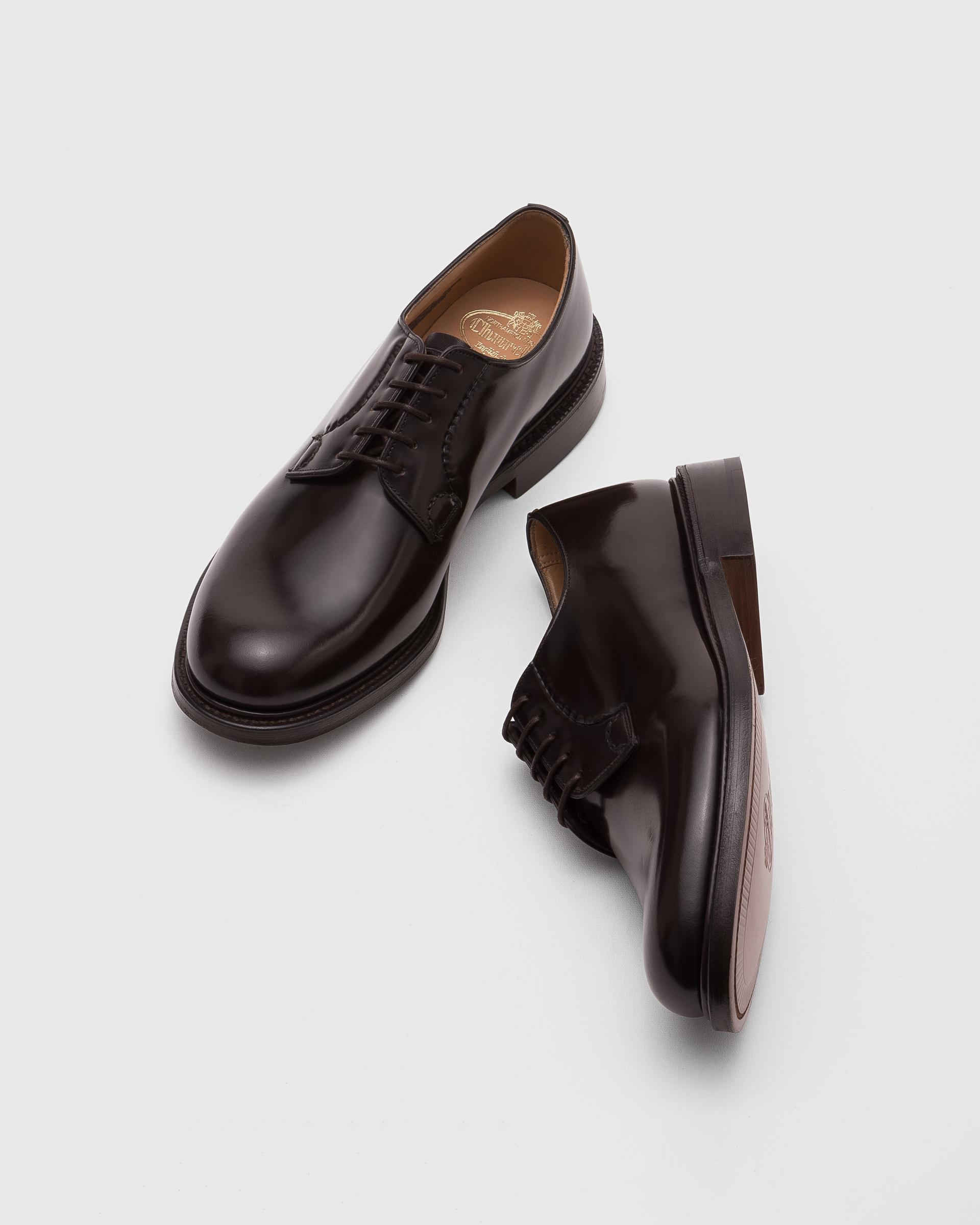
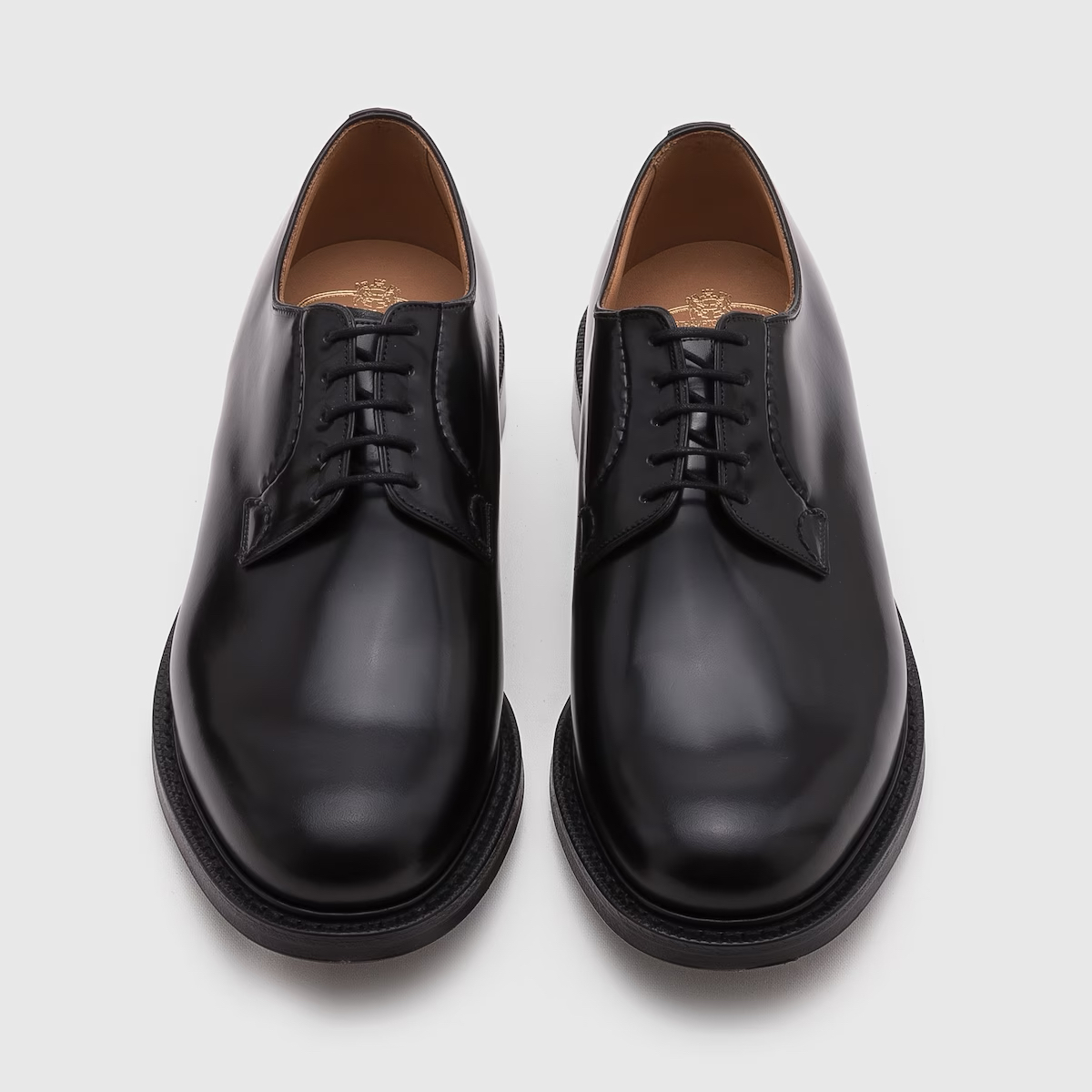
If you’re after a lasting icon in the derby style, the Shannon has been in continuous production since 1974 and is an Esquire fave. Church’s (that name again) is owned by Prada but still makes its shoes in Northampton. We have Edward Smith Stanley, 14th Earl of Derby to thank for, well, the derby style (pronounced darby if one stickles). Irritated by traditional closed-front oxfords, which were hard to get over his unusually high insteps, Derby had his shoemaker set the laces into separate tabs stitched onto the vamp, so opening up the throat of the shoe and making it easier to get on and off and more comfortable when worn. Arguably, the derby is the most popular dress shoe style to this day, especially in America, offering a degree of casual comfort that the oxford cannot. Which makes the derby the closest thing in “proper” shoe world to a sneaker—even more so when it’s broken in.
|
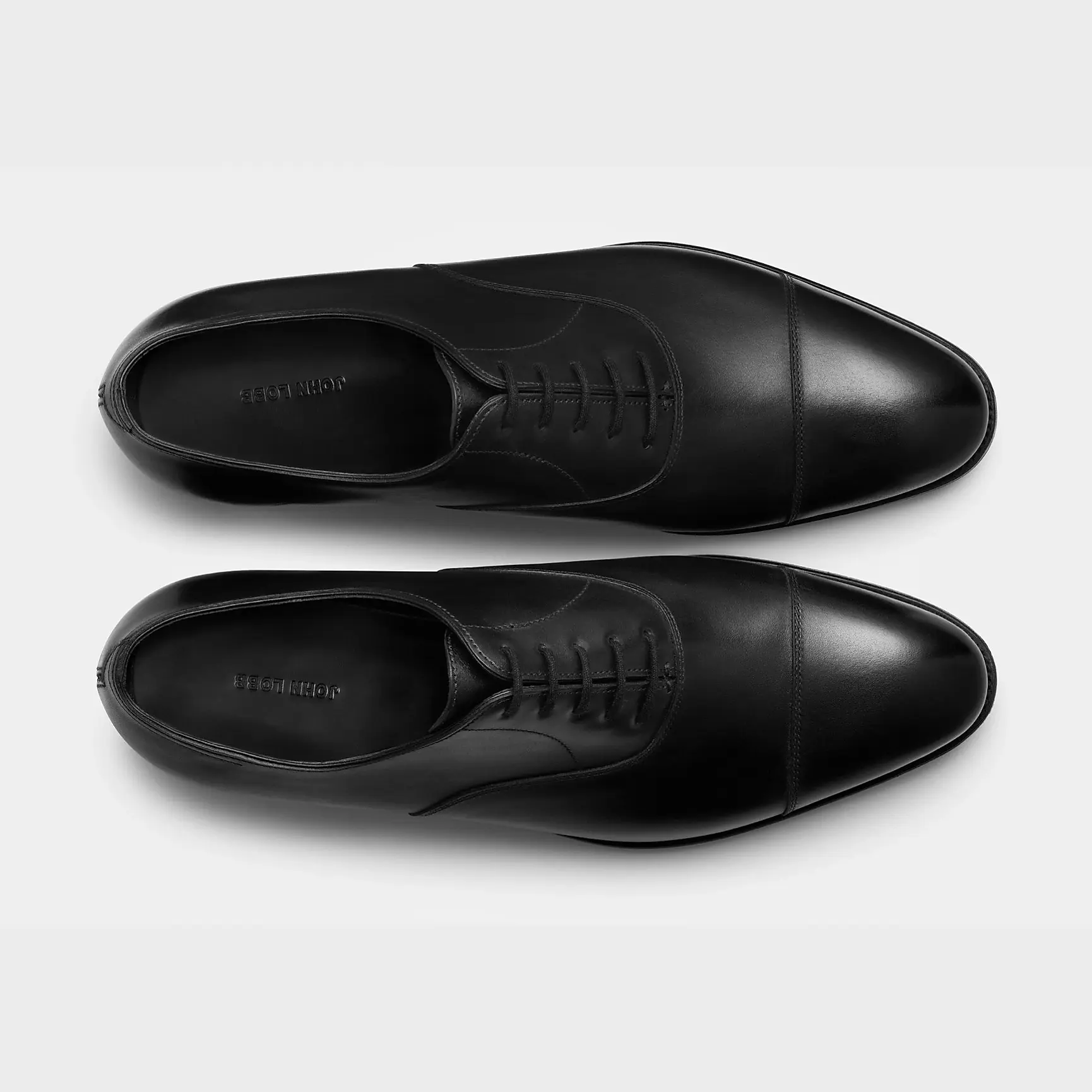
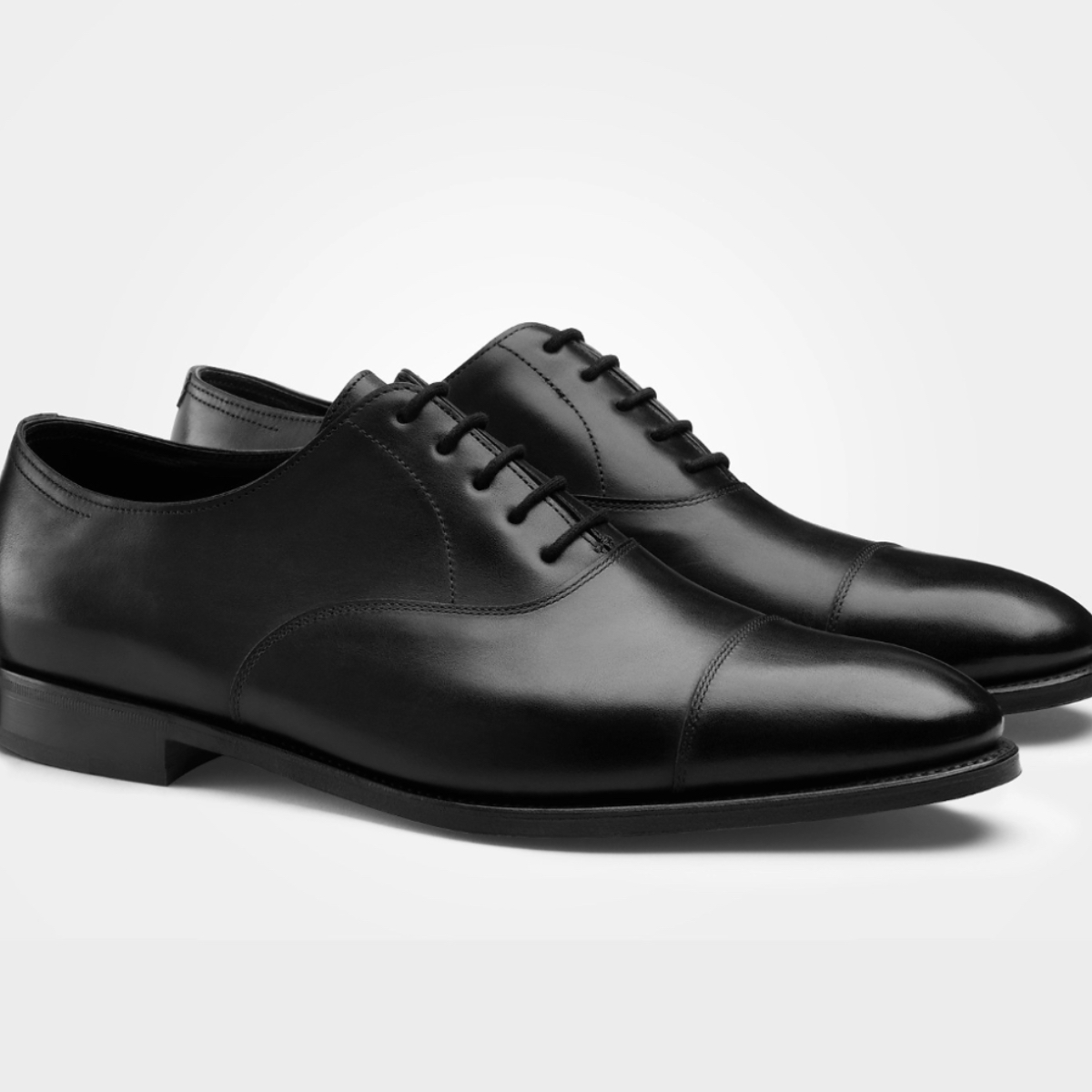
There are few names more illustrious in shoemaking than Lobb, a benchmark for handmade shoes since 1849. While the original Lobb bespoke store in London remains in family ownership, the larger commercial offshoot was acquired by Hermès in 1976 to apply the same know-how to create beautiful ready to wear and made to measure shoes from its base in Paris. Arguably, there is always a place in the grown man’s shoe cupboard for a sleek black oxford shoe like John Lobb’s City II, which comes with the house’s signature elegant last shape. While the prices are on the high side, it’s the only black dress shoe you will ever need. Think of it as a 20-year investment. And then consider the deep chocolate brown version, which is a thing of beauty.
Trivia Footnote: It always rattled me (and no doubt many other style pedants) that the motto of the Kingsmen in the utterly flawed and generally silly Matthew Vaughn movies was “oxfords not brogues,” a sartorially motivated nod to the “shaken not stirred” of James Bond. An oxford is a shoe construction with a closed front while a brogue is simply a way of patterning shoes—which means you can have an oxford that is also a brogue. The Kingsmen should have known, and someone in the script department needs shooting.
|
|
|
|
Thanks for reading this week’s Big Black Book newsletter. See you in a couple weeks. Until then, feel free to drop me a note at nicksullivanesquire@hearst.com.
- Nick Sullivan, creative director
|
|
|
|
Did someone forward you this email? Sign up here.
|
|
|
|
|





No comments:
Post a Comment