What’s a Vintage Car Rally Really Like?
|
In the passenger seat of a 1939 Aston Martin, I spent two days hurtling through the mountains in The Louis Vuitton Dolomites Classic Run.
|
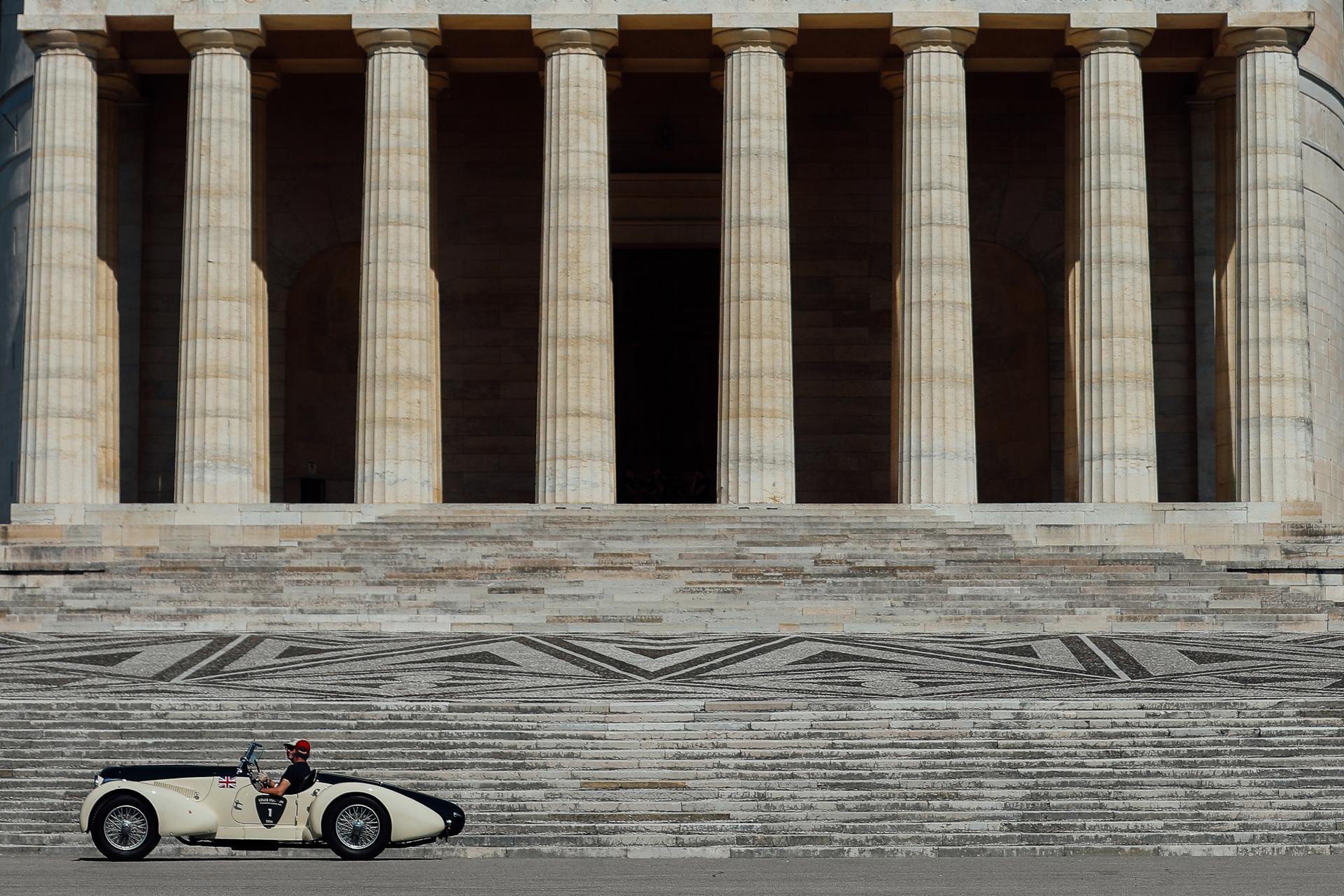
The author, along with driver Gianandrea Redaelli, in the 1939 Aston Martin C-Type Speed Roadster Bertelli. (Photo: Lorenzo Sodi)
|
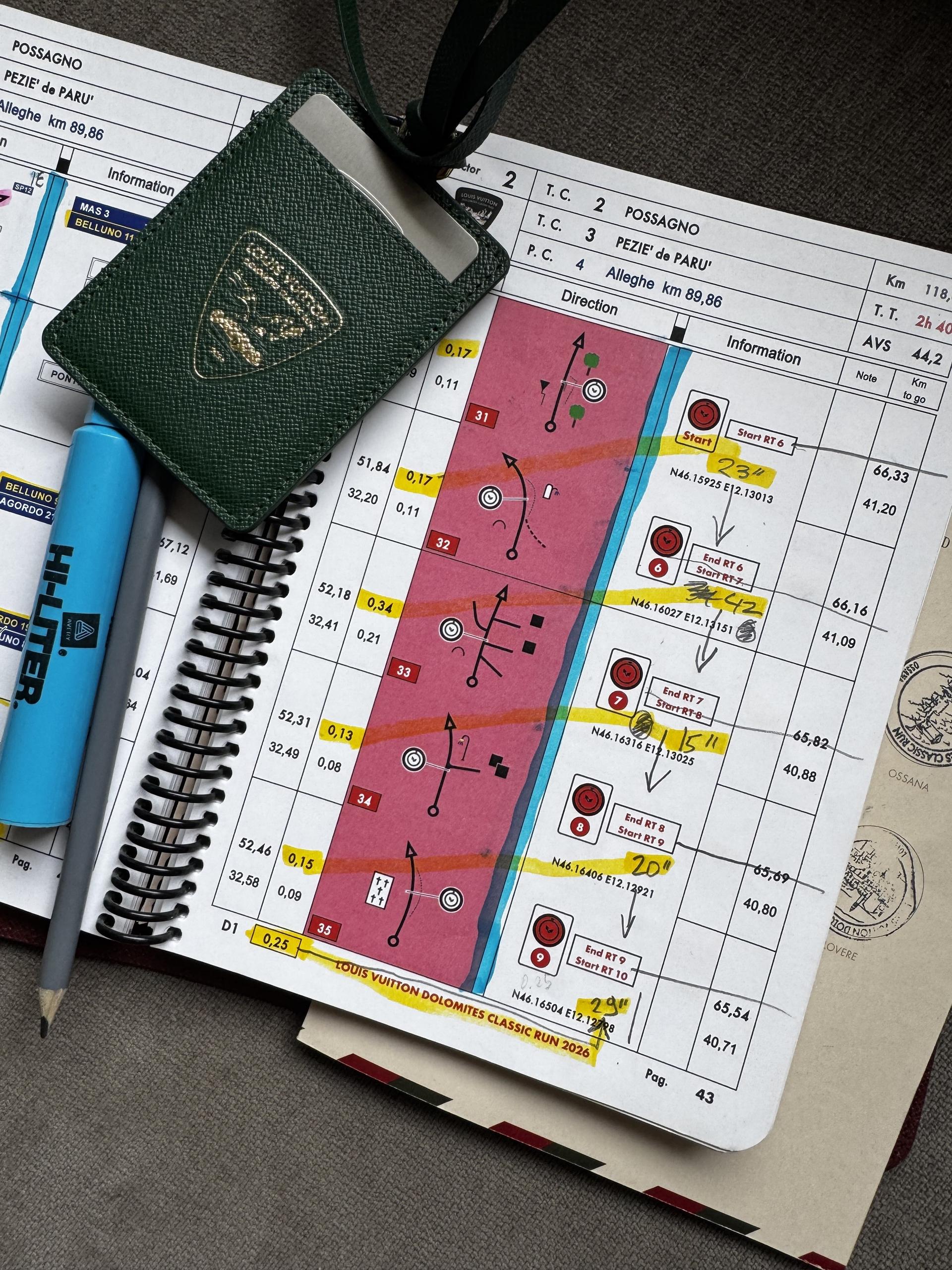
In vintage rally driving, there are generally two types of competitor. Both share a passion for keeping priceless and often historic vehicles in use on the open road rather than displaying them polished under glass at home. But while some see the drive itself as challenge enough, others tend to adhere to the Road Book, the hundred-odd pages of complex directions which the copilot uses instead of a map to navigate, maintaining a constant flow of instructions to the driver. It is this book and how closely you follow it that decides the eventual winner.
Gianandrea Redaelli, of the century-old Varese printing family, is firmly in the “road book” camp. Thanks to Louis Vuitton, 10 days ago I got to sit in the copilot seat with Redaelli he drove the 600 kilometers of “left at the traffic lights” instructions for The Louis Vuitton Dolomites Classic Run, which started in Venice and ended, after a scenic but challenging two-day detour high into the Dolomite mountains, at Monza, the home of Italian Formula 1, just in time for practice day for the Italian Grand Prix.
|
The dreaded Road Book. (Photo: Nick Sullivan)
|
Gianandrea’s car of choice was a 1939 Aston Martin C-Type Speed Roadster Bertelli, just one of two ever built, with an experimental aerodynamic aluminum body handmade in England. His, well known in collecting circles, was nicknamed the “Flying Pea” when it was still at the factory. The family collection (of unconfirmed size) started with an old Fiat Topolino, gifted by Gianandrea’s grandfather to his father. But serious rallying competition only began in the early years of this century, competing in the prestigious Mille Miglia in 2005, before winning as Italian National Championship in 2009.
|
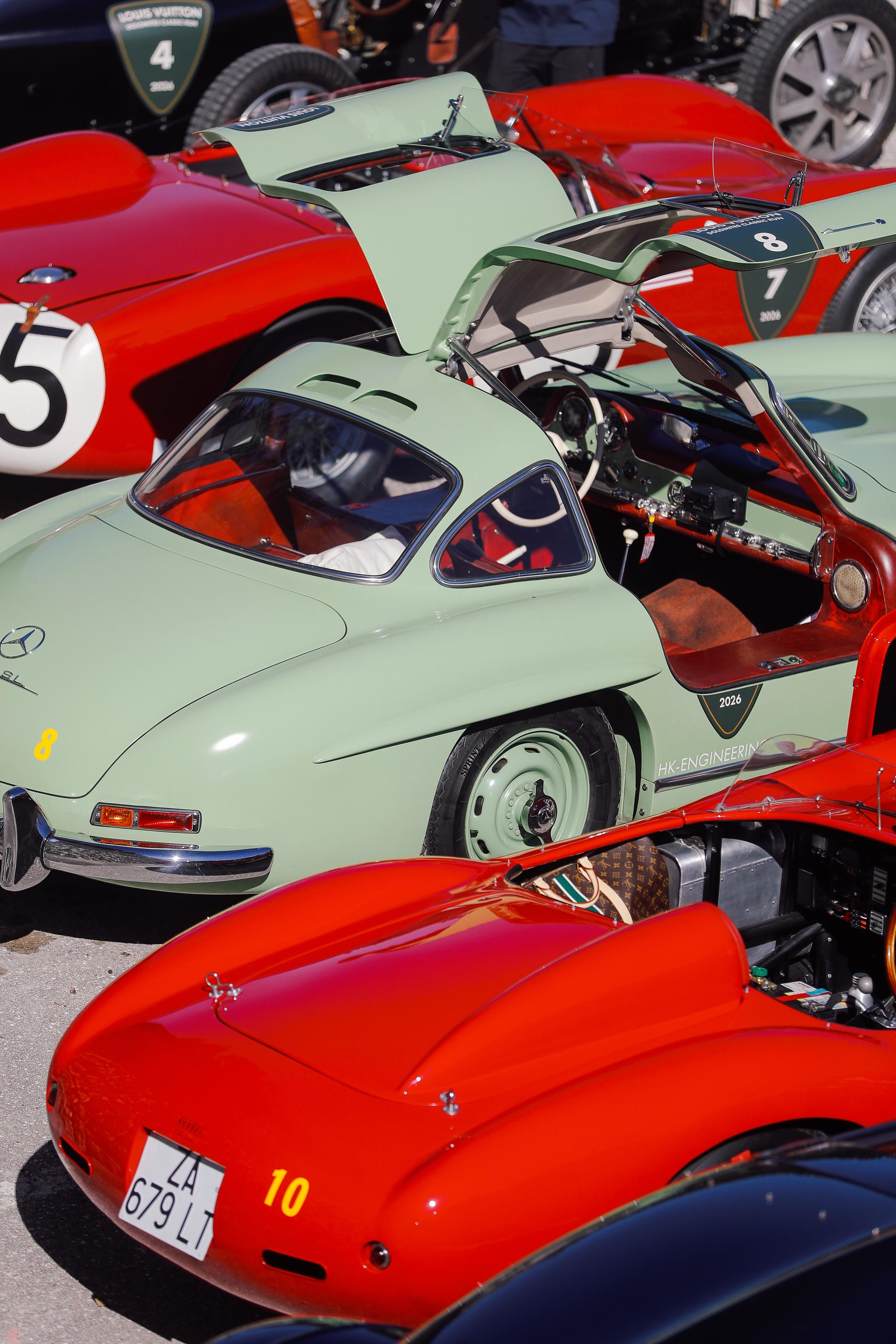
Cars gathered at the rally. (Photo: Lorenzo Sodi)
|
As I was Gianandrea’s designated copilot, the pressure was on me, too. Rally racing in vintage cars is not about speed but about time, something that requires pinpoint accuracy arriving at the time-stamp points in the overall course and, most critically, in the regularities, fiendishly short time-over-distance sections in which crossing the line just a few hundredths of a seconds late—or early—earns strict penalties. I have been a copilot before, and it’s no picnic. So, sensibly, the day before the race began, Gianandrea took me out in the Aston in the Veneto countryside to practice, especially those critical regularities.
I could have opted for an easy life. The rally was structured to allow competing cars, dating from 1930 to 1965, to go full-on or follow the course using a map in a dedicated phone app. But where’s the fun in that? Says Redaelli, “If you join a competition, you follow the regulations and strive to do your best. As an Italian, if you paint numbers on the door of my car, I will want to win.”
|
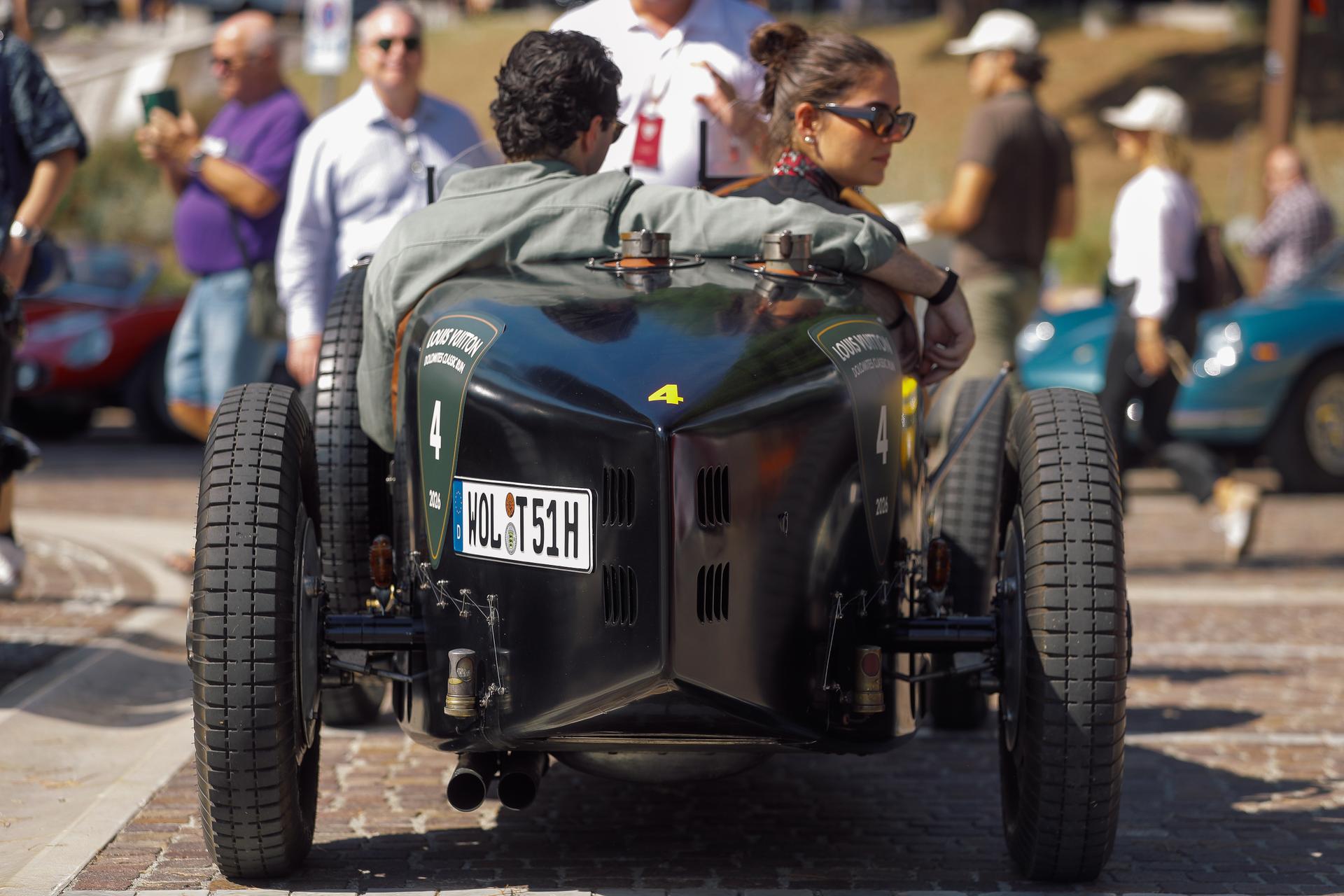
For car fans, the event was an embarrassment of riches. (Photo: Lorenzo Sodi)
|
Venice might not seem the most logical starting point for a road rally given the relative wetness of the streets. But the city was chosen this year because it was also the alluring end point of the last LV rally of its kind, back in 2012, known as the La Serenissima Run from Monte Carlo to Venice. Gianandrea won that one as copilot, with his father Giuseppe at the wheel. They also won the Boheme, the one before it, across Hungary, Austria, and the then-Czechoslovakia in 2006.
Every car in a rally like this comes with its own mechanical idiosyncrasies. On flat ground, a souped-up 2026 sports car with all the modern tech and comfort would find these tests difficult to nail. In the reality of race conditions, the regularities often involve steep climbs or descents and unexpected hairpin corners, calling for an expert hand at the wheel—and foot on the gas pedal. The tendency of some car doors to swing open at hard bends only adds to the excitement.
|
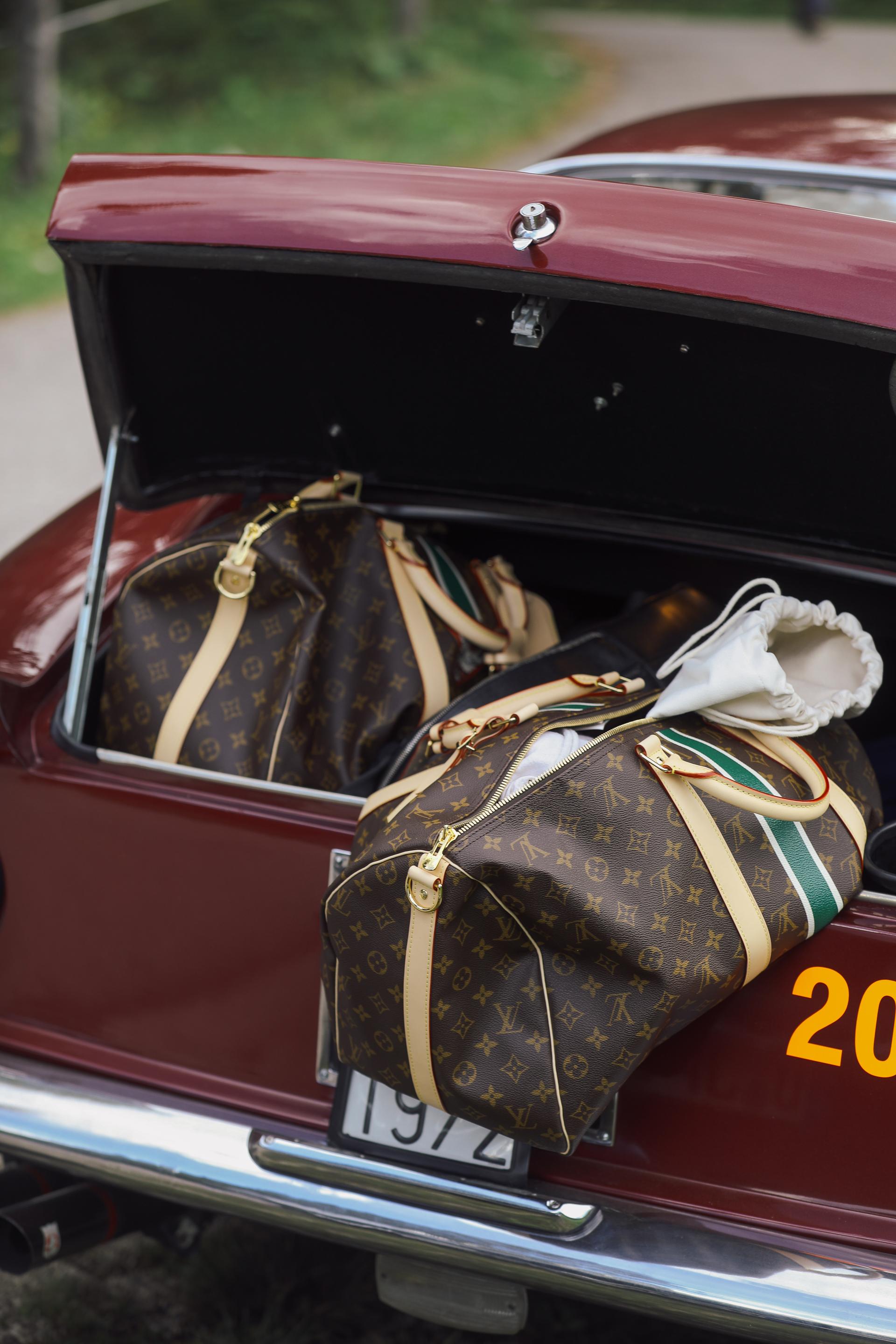
Louis Vuitton created race-specific bags for the rally, as seen here. (Photo: Lorenzo Sodi)
|
Louis Vuitton has been involved in these glamorous and exacting vintage rallies since the 1990s. This month’s Dolomites Run represents its return to vintage rallying after a gap in parallel to its global sponsorship (since 2025) of Formula 1. Unconfirmed rumors circulated in the field that the new choice of ending the rally at a Formula 1 Grand Prix could well be repeated—and soon—in other countries in the future. It’s easy, after all, to see why this fusion of out-and-out luxury and cars appeals to Louis Vuitton and competitors alike.
Navigating, I was learning, is not so much about providing a constant babble of information as knowing how to give clear and simple instructions. As the finish line neared in Monza at the end of two long days, I was able to give Gianandrea the most helpful instruction of all: “Nothing for 15 kilometers.”
“That,” he very kindly said, “is the mark of a pro.”
|
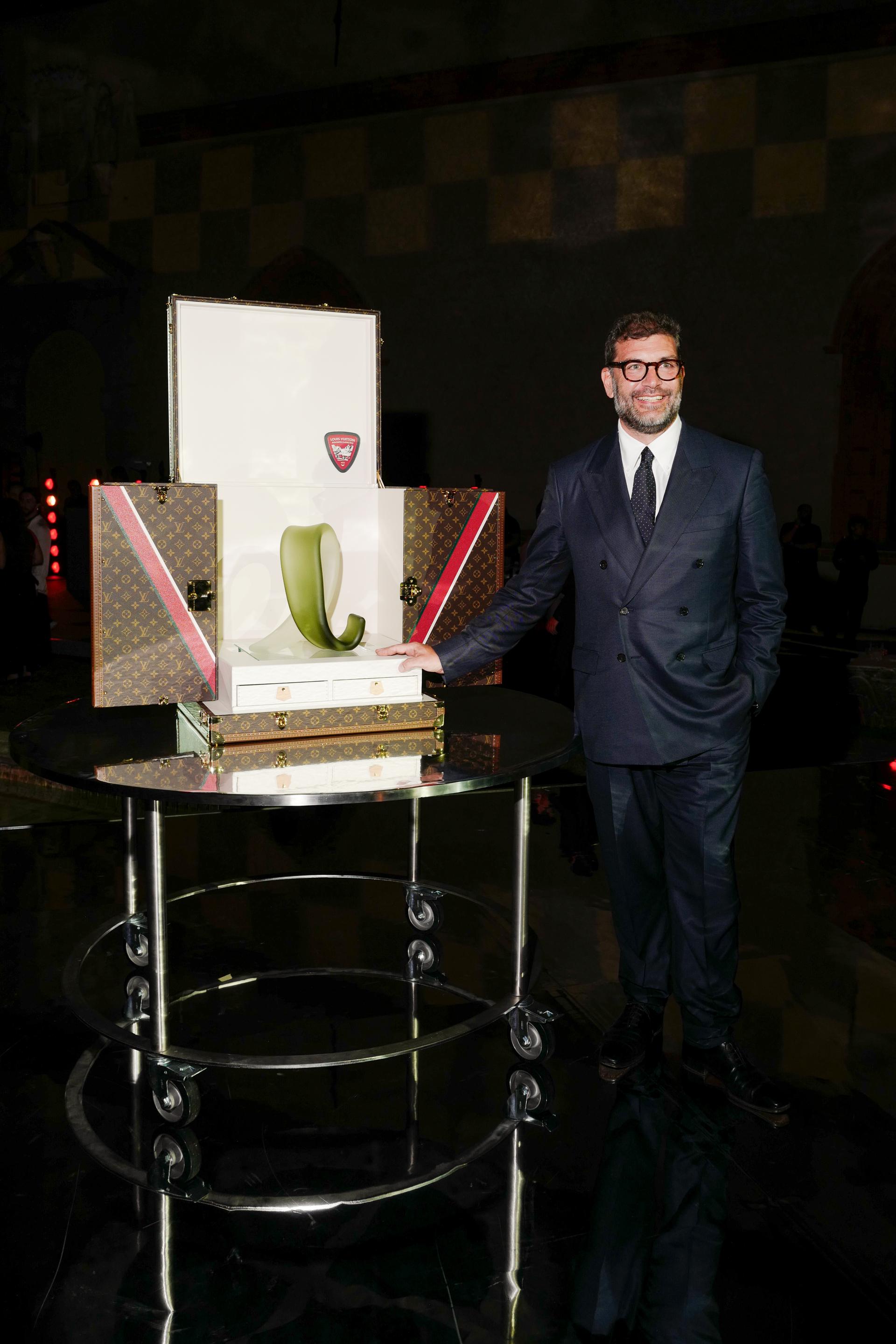
Redaelli and his trophy. (Photo: Lorenzo Sodi)
|
However, we were still clueless about how well we’d done overall. That changed at the final event, a dinner inside the Sforzesco Castle in Milan. Redaelli stepped up beaming as winner of the race, and for the first time as driver. I stood somewhat sheepishly behind him as copilot as he received the trophy from Louis Vuitton’s CEO, Pietro Beccari. It’s an impressive swirl of Murano glass created by Venier, housed in its own, equally impressive traveling case, made (of course) at Louis Vuitton’s atelier in Asnières.
Gianandrea has promised me visiting rights.
|
|
|
|
Thanks for reading this week’s Big Black Book newsletter. See you in a couple weeks. Until then, feel free to drop me a note at nicksullivanesquire@hearst.com.
- Nick Sullivan, creative director
|
|
|
|
Did someone forward you this email? Sign up here.
|
|
|
|
|





No comments:
Post a Comment